Dec 03, 1965 › Dec 12, 1965
The Beatles' 1965 UK Tour
By The Beatles
Last updated on November 23, 2025
Dec 03, 1965 › Dec 12, 1965
By The Beatles
Last updated on November 23, 2025
Rehearsals for the 1965 UK Tour
Late November 1965
Rehearsals for the 1965 UK Tour
Dec 01, 1965

Early September 1965
Tickets for The Beatles’ UK tour are on sale
Oct 31, 1965
A day off in Liverpool and Chester
Dec 06, 1965

Radio Scotland begins broadcasting
Dec 31, 1965

Are the Stones more popular than The Beatles? Paul comments...
Dec 25, 1965 • From Record Mirror

Backstage interview in Cardiff
Dec 12, 1965

Interview for Harford Times / WDRC
Dec 07, 1965 • From WDRC

Dec 05, 1965
Interview for the Northern Echo
Dec 04, 1965 • From Northern Echo

Dec 03, 1965
From Wikipedia:
The English rock band the Beatles staged a concert tour of the United Kingdom between 3 and 12 December 1965, comprising 18 shows at nine venues across England, Scotland and Wales. It coincided with the release of the Beatles’ studio album Rubber Soul and their double A-side single “Day Tripper” / “We Can Work It Out“, and was the final UK tour undertaken by the band. Weary of Beatlemania, the group conceded to do the tour but refused to also perform a season of Christmas concerts as they had done over the 1963–64 and 1964–65 Christmas seasons.
Background and repertoire
Whereas the venues for the Beatles’ summer 1965 tour of the United States had been arenas and large auditoriums, their UK concerts were all held in theatres and cinemas. The Beatles rehearsed thoroughly for the tour; according to George Harrison’s comments to the NME, their ensemble playing was also helped by their having just finished an intensive period of recording for Rubber Soul. The album marked a significant progression from the band’s Merseybeat roots, furthering the musical direction they had first adopted with their late 1964 release, Beatles for Sale. For the first time in their setlist for a tour, they now eschewed any songs from before the Beatles for Sale era. The band chose their 1964 hit “I Feel Fine“, sung by John Lennon, to open the shows, while their closing song, Paul McCartney’s “I’m Down“, became what NME journalist Alan Smith later described as “the 1965 ‘Twist And Shout‘”.
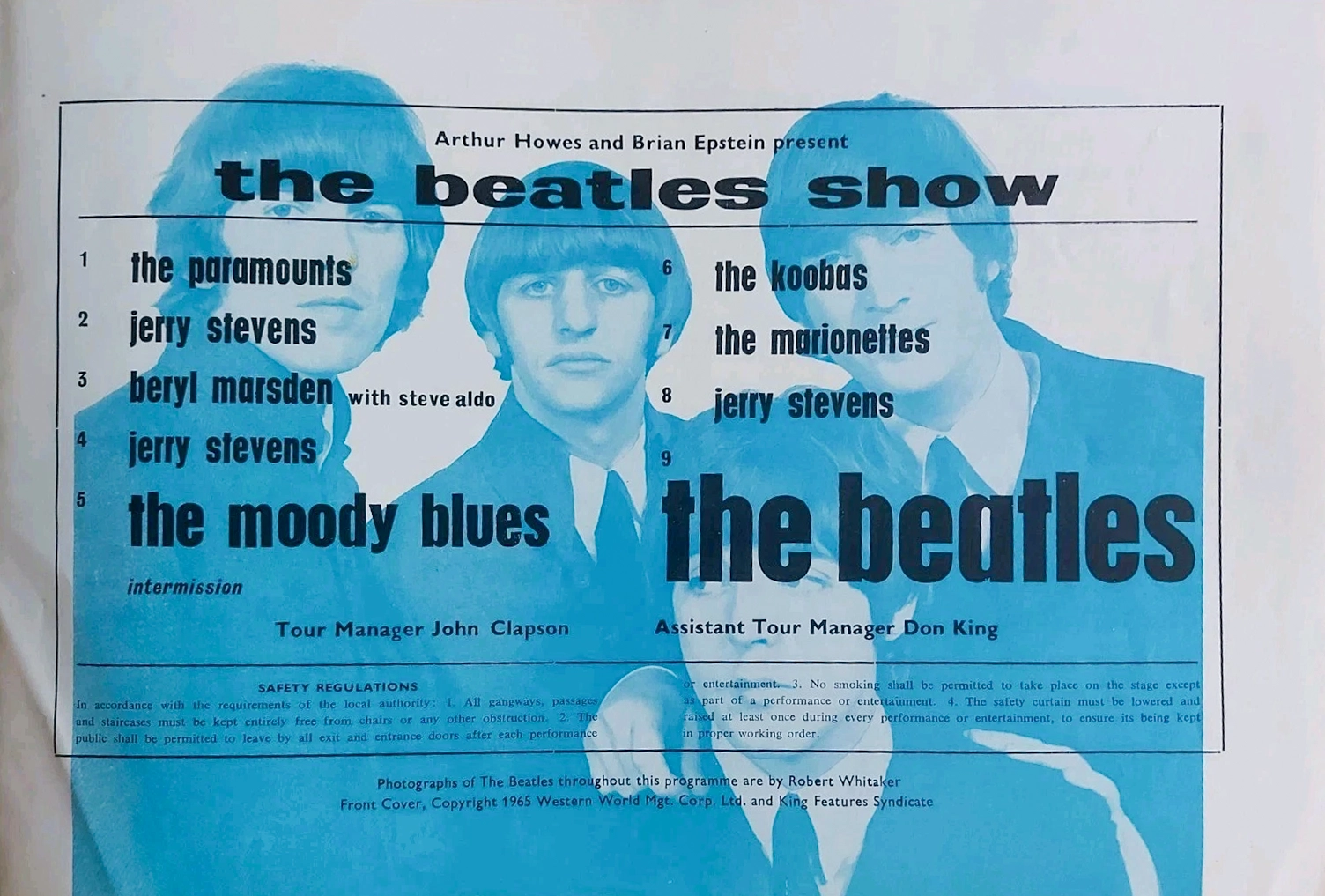
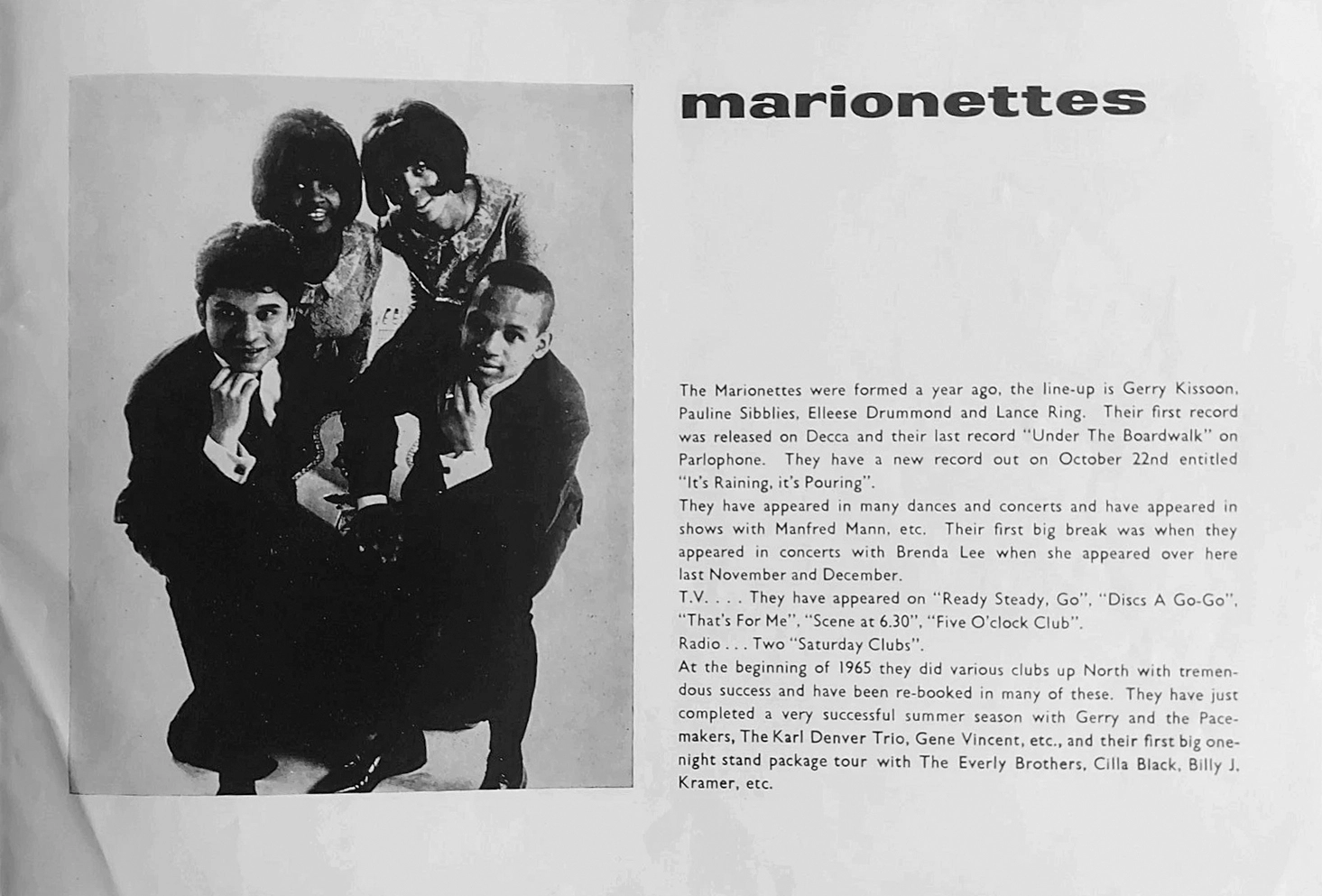
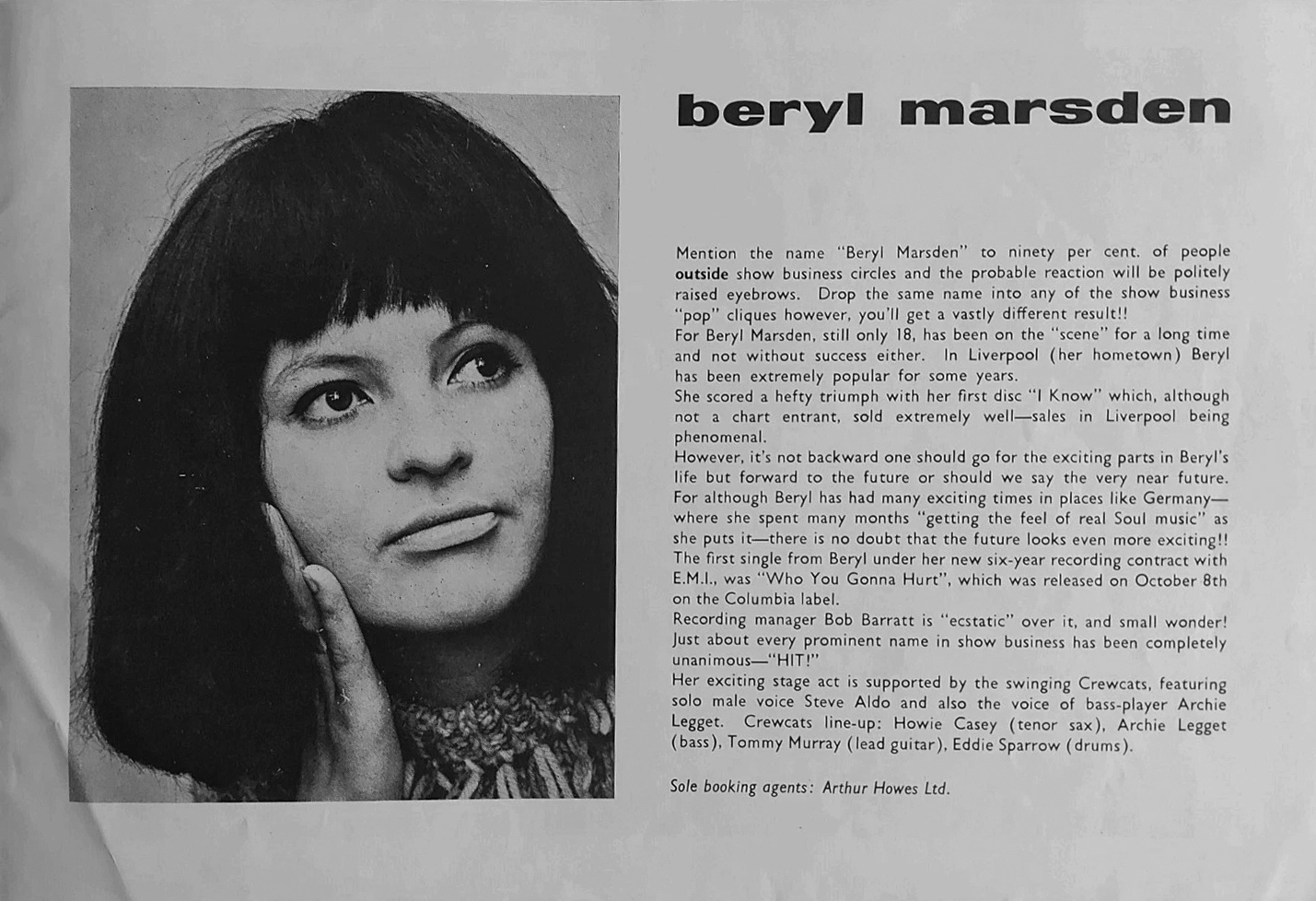
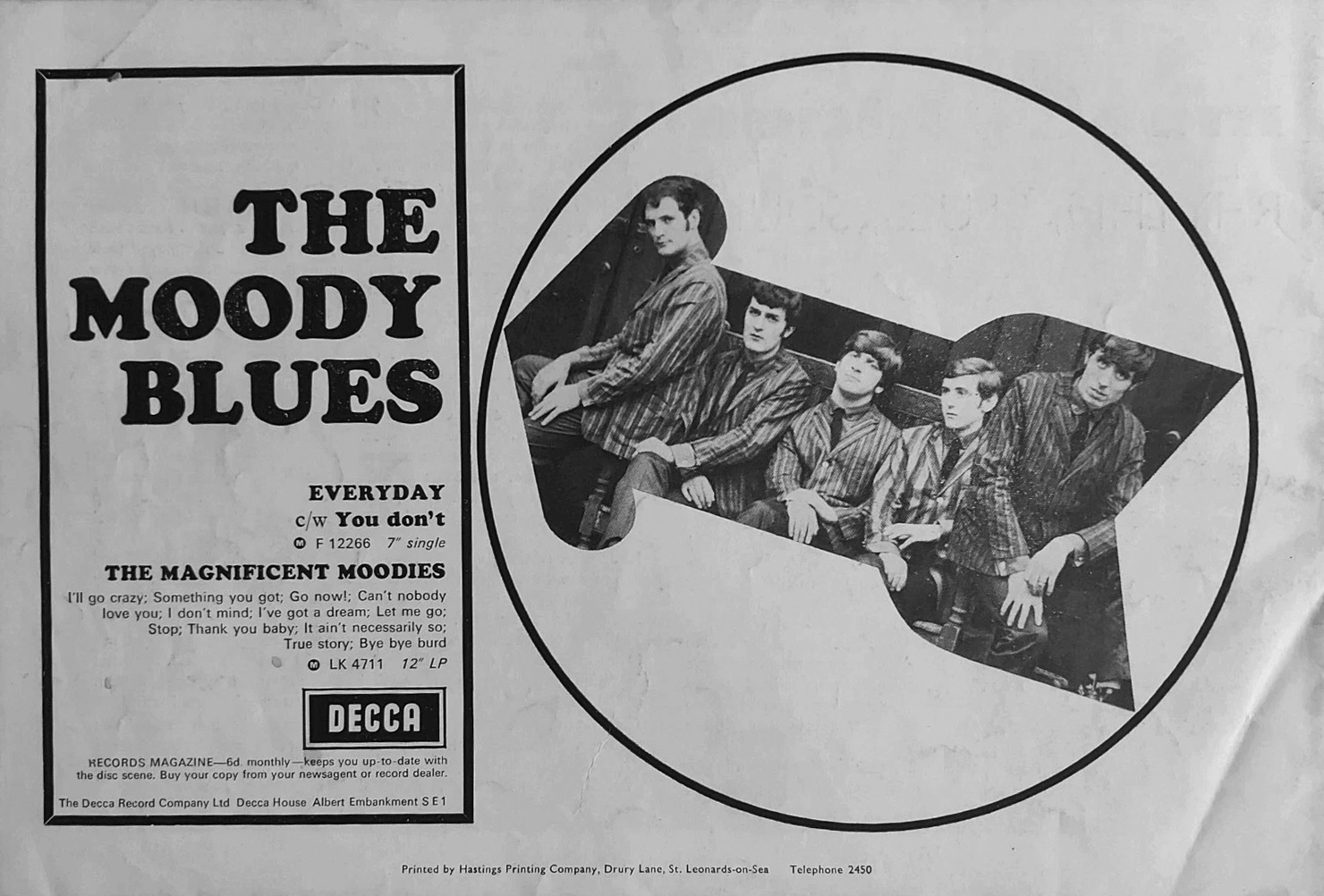
Typically for the 1960s, the UK concerts were arranged in a package-tour format, with multiple acts on the bill and two performances held each day. The support acts on the program were the Moody Blues, the Paramounts, Beryl Marsden, Steve Aldo, the Koobas, and the Marionettes. At £1000 per engagement, the Beatles’ fee was the highest paid to a performing act in Britain up to that time.
The group’s preparation ended with a rehearsal on 1 December at the London flat shared by Neil Aspinall and Mal Evans – the Beatles’ long-serving road managers and roadies. Aside from the four band members and their manager, Brian Epstein, the tour personnel comprised only Aspinall, Evans, press officer Tony Barrow and a chauffeur, Alf Bicknell. On the way to Scotland for the first show, Harrison’s Gretsch Country Gentleman and Gretsch Tennessean fell from the group’s car and into the path of a truck, destroying the instrument and leaving him with two guitars for the tour.
Tour history
Wild, ear-tingling screams burst over the auditorium as the curtains parted and the Beatles moved straight into their first number, “I Feel Fine”. John sang lead, and he was in top vocal – and humorous – form. From time to time he would throw in a funny facial expression that had the crowd roaring with delight.
The opening shows took place at the Odeon Cinema in Glasgow on 2 December. In his feature article covering the first four stops on the itinerary – Glasgow, Newcastle, Liverpool and Manchester – Smith reported that while the fans’ reaction did not seem as wild as it had been in previous years, “it’s been capacity audiences, screaming [fans] and better-than-ever performances by the group all the way.” Part of the reason for the less-frenzied mood surrounding the tour, Smith said, was due to a heavy police presence, which meant that roads around the venues were closed off and crowd numbers were confined to only those attending the concerts.
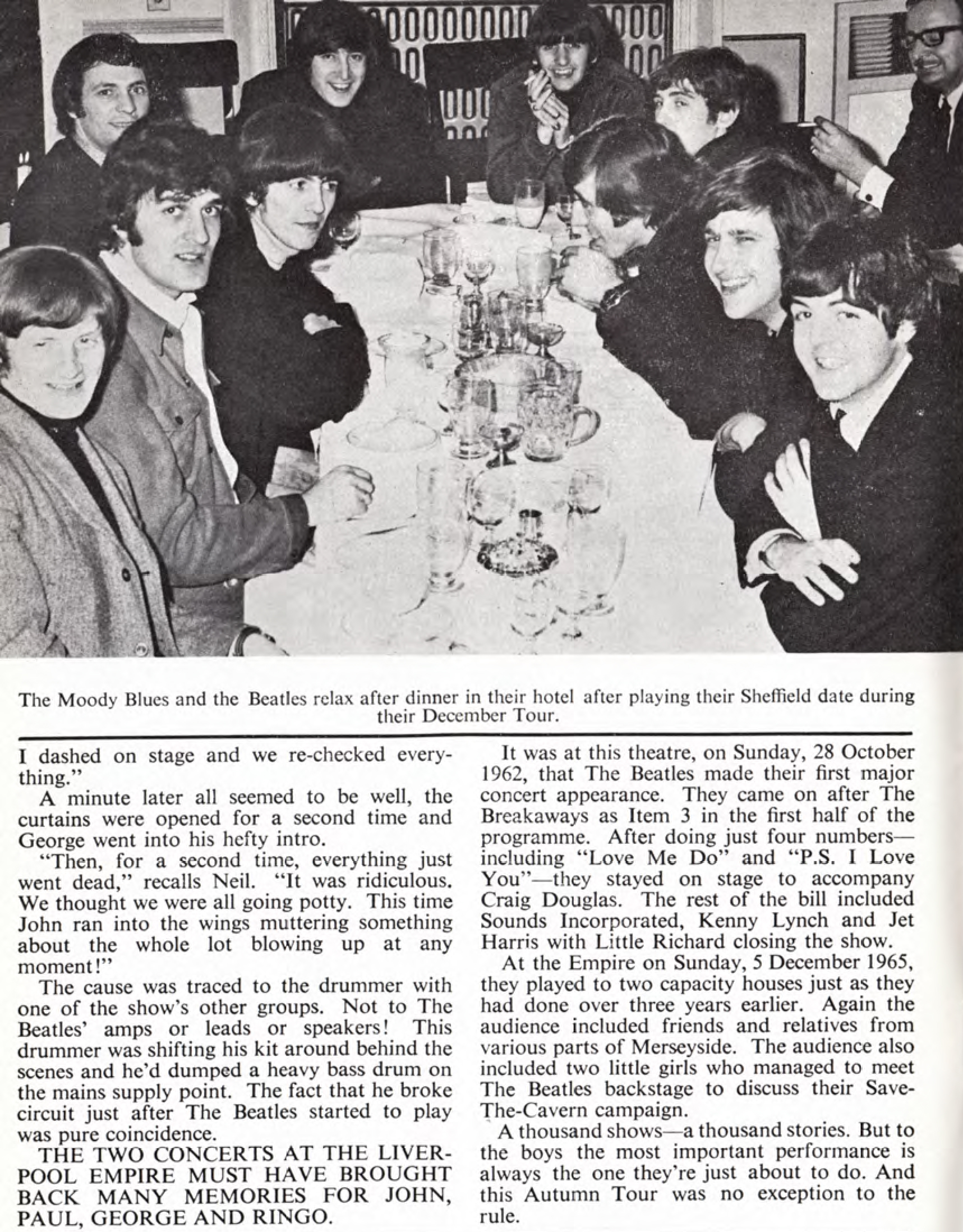
The Beatles returned to their hometown of Liverpool on 5 December to play at the Empire Theatre, with their friends and family members among the audience. At the second show that evening, McCartney accompanied the Koobas (on drums) during their performance of “Dizzy Miss Lizzy“. Otherwise, McCartney expressed disappointment at the level of police protection, saying: “just lately it’s getting ridiculous. There are so many of them about, it ruins the whole atmosphere of enjoyment.“
The winter weather hindered the band’s progress throughout the tour. In Glasgow, Epstein was forced to change their accommodation to an inner-city hotel, to ensure that the Beatles made it on stage. Travel was affected by snow on the roads around Newcastle, by dense fog in Manchester, and by heavy rain on the way to Birmingham. At the first performance at that city’s Odeon Cinema, the Moody Blues extended their set to cover for the Beatles’ late arrival.
The Beatles played the first of two London venues, the Hammersmith Odeon, on 10 December – the day the NME announced that its readers had voted them Best British Group and Best World Group for 1965. In the same poll, Lennon won in the “British Vocal Personality” category. The following day, Melody Maker listed Rubber Soul at number 1 on its national albums chart.
Finsbury Park Astoria holds 3,000 people and I swear that almost every one of them has been standing on a seat … They tell me the hysteria and the fan scenes were even worse at Hammersmith last night. I did not think I would say this again but, without question, BEATLEMANIA IS BACK!
The 11 December concerts, at the Astoria in Finsbury Park, north London, received what author Barry Miles later described as a “tremendous” reception. Retracting his earlier statement about the growing maturity of the group’s fans, Smith wrote: “I have not seen hysteria like this at a Beatles show since the word Beatlemania erupted into headlines … George Harrison staggered off the stage soaking in perspiration as he told me: ‘This is one of the most incredible shows we’ve done. Not just because of the audience, but because they’re Londoners!’” Lennon elaborated: “We used to think Londoners had that cool we’ve-seen-it-all-before outlook but we take it all back!“
The tour ended on 12 December with two performances at the Capitol Cinema in Cardiff. Some 25,000 applications were received for the 5000 tickets. These shows proved to be the final UK concerts the Beatles played outside London, where they went on to perform for the last time at the NME Poll-Winners’ Concert in May 1966.
They had played their last live U.K. concerts three weeks earlier, in early December, although it wasn’t advertised as such. For the concert at the Empire Theater in Liverpool alone, forty thousand fans applied for tickets, against two houses of two thousand five hundred seats each house. Other concerts took them across England, ending at the Capitol Cinema in Cardiff, Wales, on December 12, 1965. As usual, you couldn’t hear the Beatles through the screaming of the fans.
As John said afterward in some disgust, “I reckon we could send out four waxwork dummies of ourselves and that would satisfy the crowds. Beatles concerts are nothing to do with music anymore. They’re just bloody tribal rites.”
Tony Bramwell – From “Magical Mystery Tours: My Life with the Beatles“, 2005
Beatles for end of year British tour
THE Beatles, at present resting after their hectic U.S. tour, are to make a short British tour later this year.
The tour, set for some time in November or December, will take in seven venues: Glasgow, Newcastle, Liverpool, Manchester, Sheffield, Birmingham and London. At present, no dates are set for the tour.
The group will also record a new single and an LP for release just before Christmas. It is understood that they will be recording tracks for these two releases over the next two months.
During this time, they have no appearances planned, but will be discussing their next film which will again be produced by Walter Shenson, but not necessarily directed by Dick Lester. It will not necessarily be in the same style as their last two films either.
The Beatles started talks this week with Dick Condon, writer of the book “A Talent For Loving” from which the film will be adapted.
The Beatles will spend three to four months on location in Britain and in Spain early next year shooting the film.
The group hope to return to America sometime next year and a tour of South America, where they have been in demand, is also a possibility.
Some time in October or November, they will tape a Lennon–McCartney spectacular TV show for Granada Television. Also appearing will be Cilla Black and the show will be produced by Johnny Hamp, probably from Manchester.
The TV film of the Beatles’ Shea Stadium concert is reported to be a “knock-out” and has already been sold to US TV. British television have not yet bought the film.
From Melody Maker – September 11, 1965
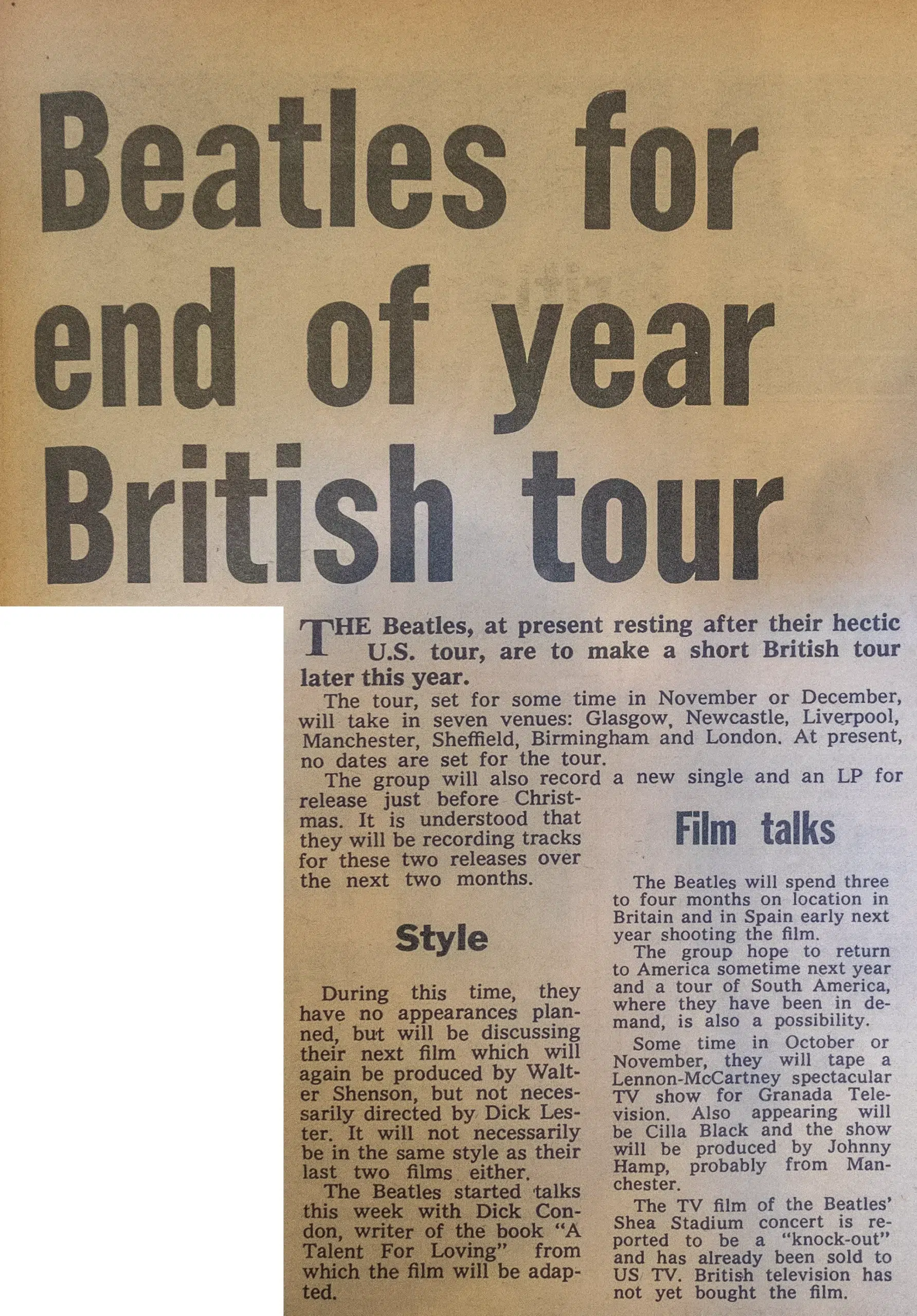
BEATLES COMING YOUR WAY!
THE BEATLES are to tour Britain this year after all! The news follows a Disc Weekly reader-investigation four weeks ago as the Famous Four began their American tour.
The Disc Weekly readers’ Pop Panel said that if the Beatles toured America and the Continent, they “owed British fans a tour this year, too.” Concerts will be staged in major cities at the end of November and in early December. Moody Blues — newly signed by Brian Epstein — will tour with them.
Sounds Incorporated are hot favourites to join the supporting cast. Exact dates are still being fixed, but 1965 Beatle cities are: GLASGOW, NEWCASTLE, LIVERPOOL, MANCHESTER, SHEFFIELD, BIRMINGHAM, LONDON
From Disc Weekly – September 11, 1965
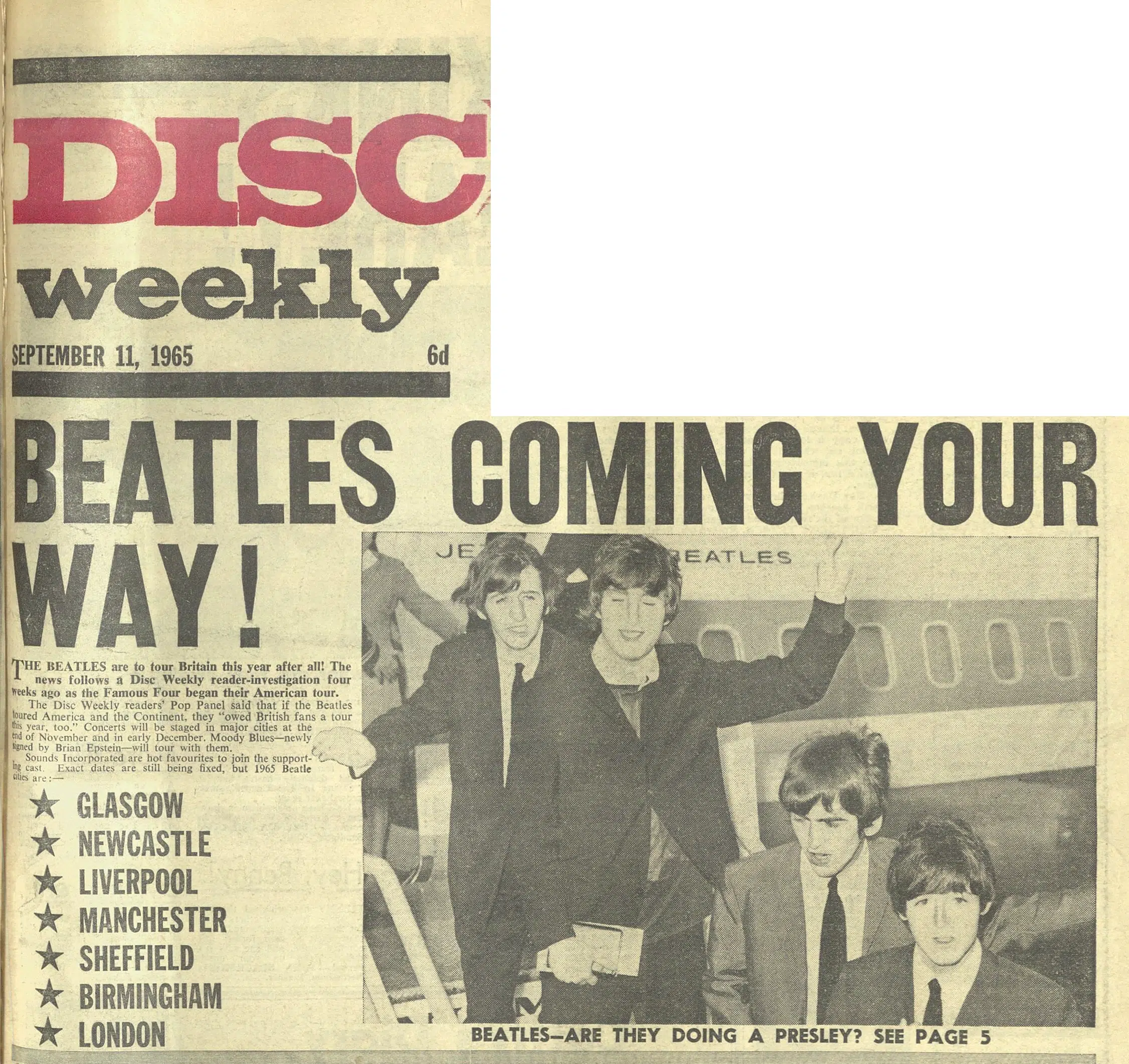
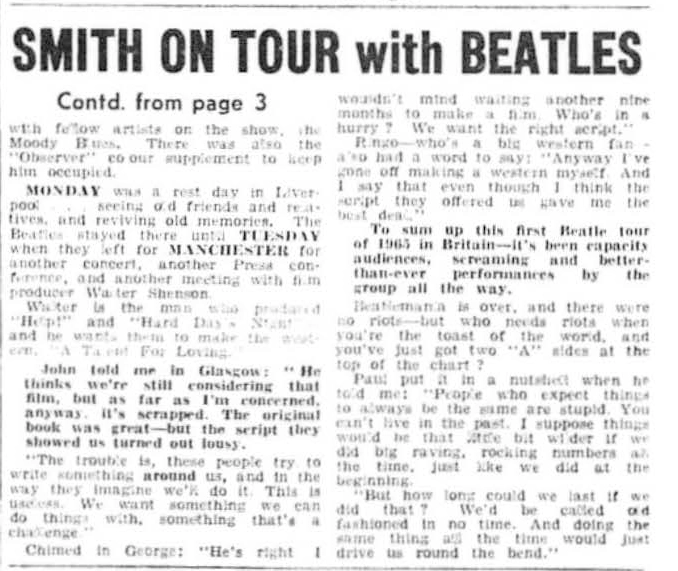
ALAN SMITH goes on tour with THE BEATLES!
LIKE something from the world of James Bond and international intrigue, a sleek Austin Princess with black tinted windows headed out of London in the bleak early hours of last Thursday morning, streaking with 007 speed in the direction of the English-Scottish border.
INSIDE the car it was a different story. Slumped cosily in the comfort of four specially fitted armchairs were those most un-Bond-like characters, the Beatles — eating fish and chips from newspaper! This was breakfast and lunch rolled into one for them.
I flew to Glasgow to follow the show for NME readers and I have been the only journalist to stay with the tour right through until the middle of this week. I will not say it has been the greatest tour the Beatles have ever played. I know the group can do without hypocrisy like that. At the same time, some of the national newspaper journalists who’ve decided in paying down their impact could well have their heads examined.
Crazy Beatlemania is over, certainly Beatles fans are now a little bit more sophisticated than Rolling Stones groups, for the proof is in the Glasgow experience. But there were two jam-packed houses, some fainting fits, and the dream waves of screams that hit the city’s Odeon Theatre interior.
At one point I was literally deafened to time by the surging, screaming waves of sound coming from the audience. But let me put you in the picture as it happened — from Glasgow to Liverpool and then Manchester earlier this week.
Security
It was late on Thursday night that the Beatles’ Austin Princess arrived at Berwick-on-Tweed on the English-Scottish border. High security arrangements had been made for them to stay overnight at a small hotel in the town and they worked so well that only a few people were there to see them off the next morning!
Friday morning’s drive to Glasgow brought almost the only untoward incident of the tour. It seems that fourteen Beatles guitars were strapped to the boot of the Austin Princess, but on a particularly bumpy stretch of road, one of them – a Gretsch belonging to George – fell out and into the path of on-going traffic.
George told me later: “About 13 lorries went over it before our chauffeur could get near it. Then one of the lorries stopped and the driver came up with the dangling remains of it and said: “Oy, is this ‘ere banjo anyfink to do wiv you? Some people would say I shouldn’t worry because I could buy as many replacement guitars as I wanted, but you know how it is, I kind of got attached to it.
GLASGOW
The guitar incident over, the Beatles’ car drove on and eventually arrived at Glasgow’s Central Hotel late in the afternoon. It was the ideal place for them to stay — built like a grim, impregnable fortress, and so big inside you could comfortably use a taxi to get about. Even then you’d need a good driver and a map.
A big steak, a wash, and then the boys were whisked off to a press conference. It was set for 4:45 p.m., but they’d been told it would start at 4 p.m. The idea was that they’d be late for 4 o’clock – but on time for quarter to five! They actually arrived at the conference at 5:10 p.m. You know how these things are.
Sensation of the press conference? Paul’s massive floral Mod tie, bought at Harrods a few days ago! John clowned about for the photographers, wiping his nose on it and making cracks like “where did he get it? Leased it from Arthur English!“
Even one of the hotel’s chefs was taking pictures at that conference (actually in the theatre), but the boys managed to get away in the end.
At last – backstage – there was time for them to relax as they waited to go on stage. The audience were filing in row and we could make out the screams and shouts of “We want the Beatles.”
Outside, the scene wasn’t so enthusiastic. The police were there in force, holding off streets around the theatre and on horseback shepherding the fans. There were so many police about it was like Saturday night at Dock Green. It was certainly enough to dampen Beatlemania before it started.
Paul told me: “We don’t like it. The police have got to do their job and keep order, but just lately it’s getting ridiculous. There are so many of them about, it ruins the whole atmosphere of enjoyment.”
As it happened, arrangements by the police were so strict in Glasgow, Newcastle and Liverpool that the theatres were sometimes completely deserted from the outside. Streets around were sealed off. Only ticket holders were allowed through, and even then they were ordered to make their way direct into the theatre.
On a happier topic, I asked George how he felt to be on a British tour again after so long (the last Beatles package was late 1964). Did the long gaps between the group’s personal appearances affect them from a music point of view?
“Certainly,” George replied. “It’s easy to get rusty when you don’t play together for a long while, but we’ve been doing a heck of a lot of recording lately and it’s helped to keep us in shape. We’ve also put in a lot of rehearsals.”
He began to get ready for the first house performance. “What about song writing?” I asked. “I see you’ve written one for the Hollies. Any plans to set up your song writing plans in the future?”
He turned sharply away from the mirror. “Tell people I didn’t write it for the Hollies,” he said bluntly. “It’s called If I Needed Someone and they’ve done it as their new single; but their version is not my kind of music.
“I think it’s rubbish the way they’ve done it. They’ve spoilt it. The Hollies are all right musically, but the way they do their records they sound like session men who’ve just got together in a studio without ever seeing each other before. Technically good, yes. But that’s all.”
A comment to shock Hollies fans, certainly—but George believed in honesty whether it shocks or not.
In another corner of the dressing room John was cheerfully arranging his neat hair style into something resembling a berserk haystack. He muttered: “It takes me hours to look this scruffy.”
Ringo saw me take a note of the Lennon-ism and he mockery-taked: “John said, ‘It takes me hours to look this scruffy.’ Ho-ho!”
“O.K.,” I challenged, “you say something sparkling.”
Ringo looked straight at me in that usual deadpan way and said: “Schweppes.”
It was a fantastic opening night. As I mentioned earlier, it wasn’t up to Beatlemania standards of a couple of years ago, but you can’t escape the phenomenal impact they still make at a live appearance.
Anyone who says they’re finished — particularly with “Day Tripper” / “We Can Work It Out” at No. 1 in the NME Chart in its first week — must be out of his head!
One thing that struck me backstage however was that the Beatles have become much quieter people of late. There’s a calm, mature atmosphere about them backstage. It isn’t all jokes and drinks and living it up.
After the Glasgow show they went back to their hotel, and after a short chat, to bed.
NEWCASTLE
On Saturday morning they slept in late and then set off in the Princess (“everybody calls it John’s Rolls,” said John. “I don’t know why”), bound for Newcastle.
Here they booked in at the city’s Turks Head Hotel — Albert Finney and Sir Laurence Olivier were fellow guests, although they didn’t meet — before going on to the City Hall late in the afternoon. There are no curtains at this venue, so the show had to be re-arranged slightly.
I thought that throwing jelly babies at the Beatles was a bit old-hat these days, but the Newcastle fans have other ideas. There seemed to be thousands of the things pouring on to the stage as the group went through their act.
Before they went on, the Beatles’ quietly watched television, in a darkened room next to their dressing room. Programme they saw were “Thank Your Lucky Stars,” in which they made a filmed appearance, “The Avengers,” “Lost In Space,” and the play “The Paraffin Man.“
Beatle-cum-TV fans might like to know that they switched off “Thunderbirds” because they didn’t like it, and they weren’t too happy about the film of themselves in “Lucky Stars.“
Said John: “We did it at the same studios as we made our Help! film. We had great ideas for it — we thought it was going to be an outdoor thing, and with more of a visual appeal. I’m not really happy the way it’s turned out, but it hasn’t put me off this kind of idea for the future. I’ve no objections to filming TV appearances. For a start, it means we can film them all in one day instead of traveling round the country to do different programmes.”
Comments like that could get the Beatles accused of laziness – but it was all manager Brian Epstein’s idea, and the group told me they always intend to stick to his advice through thick and thin.
A heavy meal was laid on for the Beatles after the first house spot, and then, they returned to watching TV. I didn’t see an alcoholic drink in sight.
LIVERPOOL
The evening ended rather quietly too — back to the hotel, and so to bed. Then on to Liverpool on Sunday, arriving late afternoon.
The number of police outside rather dampened possible stage door demonstrations of enthusiasm, but inside the Empire Theatre there was no mistaking the warmth of Merseyside’s welcome home for its beloved Beatles.
Even in “the Pool,” however, I noticed a quietening down of audience reaction compared with previous concerts. I’m not knocking in any way — I just think the group’s fans are getting a bit more sensible lately. There was tons of thunderous applause to compensate for the lowered screaming decibel rate!
It really was “At Home” night at Liverpool. MP Bersie Braddock turned up, and so did George Harrison’s father and Mr. and Mrs. Starkey. George planned to see girlfriend Pattie Boyd later in the evening, while Paul spent some time making a trunk call to someone, somewhere.
While all this was going on, John talked about this, that and the other with fellow artists on the show, the Moody Blues. There was also the “Observer” colour supplement to keep him occupied.
Monday was a rest day in Liverpool — seeing old friends and relatives, and reviving old memories. The Beatles stayed there until Tuesday, when they left for Manchester for another concert, another press conference, and another meeting with film producer Walter Shenson.
Walter is the man who produced “Help!” and “A Hard Day’s Night,” and he wants them to make the western “A Talent for Loving.“
John told me in Glasgow: “He thinks we’re still considering that film, but as far as I’m concerned, anyway, it’s scrapped. The original book was great — but the script they showed us turned out lousy. The trouble is, these people try to write something around us, and in the way they imagine we’d do it. This is useless. We want something we can do things with, something that’s a challenge.”
Chimed in George: “He’s right, I wouldn’t mind waiting another nine months to make a film. Who’s in a hurry? We want the right script.”
Ringo — who’s a big western fan — also had a word to say: “Anyway, I’ve gone off making a western myself, and I say that even though I think the script they offered us gave me the best deal.”
To sum up this first Beatle tour of 1965 in Britain — it’s been capacity audiences, screaming and better-than-ever performances by the group all the way. Beatlemania is over, and there were no riots — but who needs riots when you’re the toast of the world, and have just got two “A” sides at the top of the charts?
Paul put it in a nutshell when he said to me: “People who expect things to always be the same are stupid. You can’t live in the past. I suppose things would be that bit wider if we did big raving, rocking numbers all the time, just like we did at the beginning. But how long could we last if we did that? We’d be called old fashioned in no time. And doing the same things all the time would just drive us round the bend.”
From New Musical Express – December 10, 1965
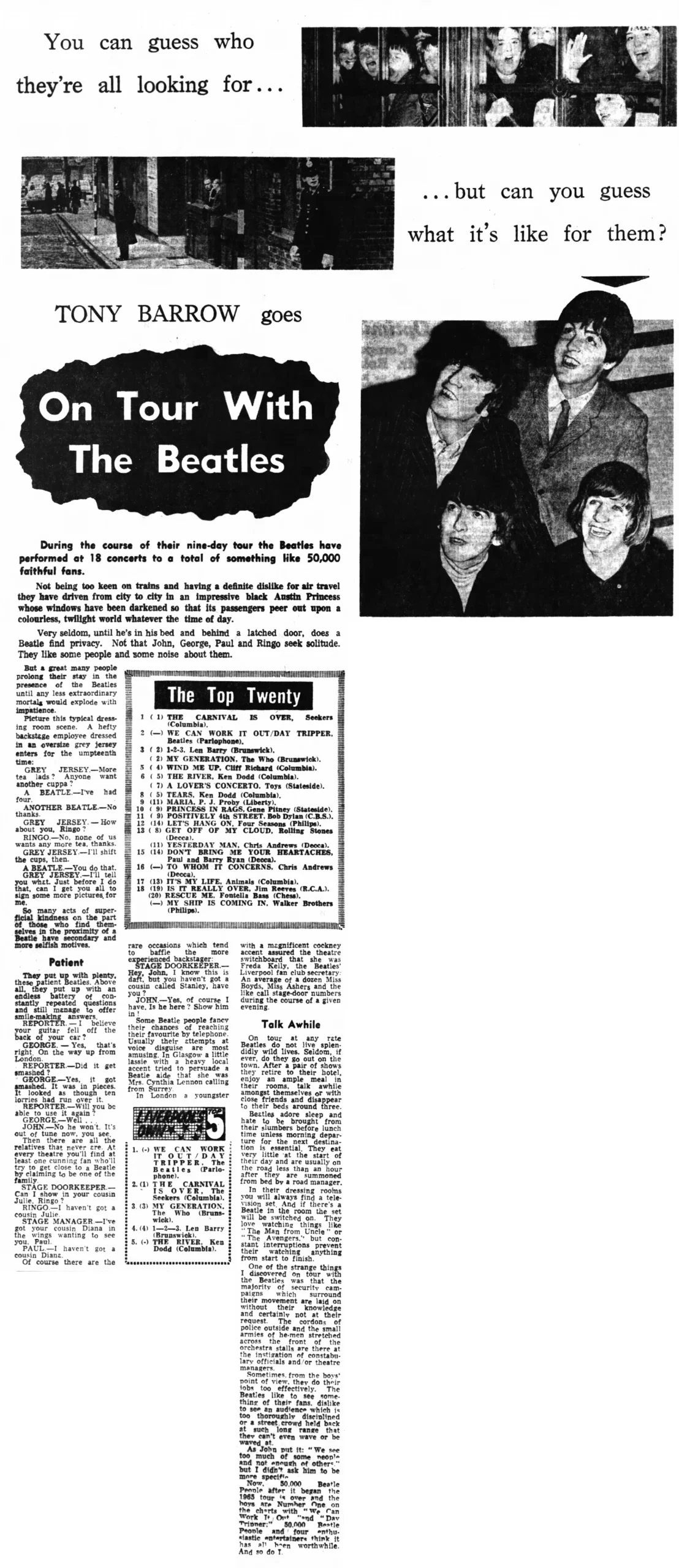
You can guess who they’re all looking for, but can you guess what’s it’s like for them? Tony Barrow goes ON TOUR WITH THE BEATLES
During the course of their nine-day tour the Beatles have performed at 18 concerts to a total of something like 50,000 faithful fans.
Not being too keen on trains and having a definite dislike for air travel they have driven from city to city in an impressive black Austin Princess whose windows have been darkened so that its passengers peer out upon a colourless, twilight world whatever the time of day.
Very seldom, until he’s in his bed and behind a latched door, does a Beatle find privacy. Not that John, George, Paul and Ringo seek solitude. They like some people and some noise about them.
But a great many people prolong their stay in the presence of the Beatles until any less extraordinary mortals would explode with impatience. Picture this typical dressing room scene. A hefty backstage employee dressed in an oversize grey jersey enters for the umpteenth time:
GREY JERSEY. — More tea lads? Anyone want another cuppa?
A BEATLE. — I’ve had four.
ANOTHER BEATLE. — No thanks.
GREY JERSEY. — How about you, Ringo?
RINGO. — No, none of us wants any more tea, thanks.
GREY JERSEY. — I’ll shift the cups, then.
A BEATLE. — You do that.
GREY JERSEY. — I’ll tell you what. Just before I do that, can I get you all to sign some more pictures for me.
So many acts of superficial kindness on the part of those who find themselves in the proximity of a Beatle have secondary and more selfish motives.
They put up with plenty, these patient Beatles. Above all, they put up with an endless battery of constantly repeated questions and still manage to offer smile-making answers.
REPORTER. — I believe your guitar fell off the back of your car?
GEORGE. — Yes, that’s right. On the way up from London.
REPORTER. — Did it get smashed?
GEORGE. — Yes, it got smashed. It was in pieces. It looked as though ten lorries had run over it.
REPORTER. — Will you be able to use it again?
GEORGE. — Well…
JOHN. — No he won’t. It’s out of tune now, you see.
Then there are all the relatives that never are. At every theatre you’ll find at least one cunning fan who’ll try to get close to a Beatle by claiming to be one of the family.
STAGE DOORKEEPER. — Can I show in your cousin Julie, Ringo?
RINGO. — I haven’t got a cousin Julie.
STAGE MANAGER. — I’ve got your cousin Diana in the wings wanting to see you, Paul.
PAUL. — I haven’t got a cousin Diana.
Of course there are the rare occasions which tend to baffle the more experienced backstager:
STAGE DOORKEEPER. — Hey, John, I know this is daft, but you haven’t got a cousin called Stanley, have you?
JOHN. — Yes, of course I have. Is he here? Show him in!
Some Beatle people fancy their chances of reaching their favourite by telephone. Usually their attempts at voice disguise are most amusing. In Glasgow a little lassie with a heavy local accent tried to persuade a Beatle aide that she was Mrs. Cynthia Lennon calling from Surrey.
In London a youngster with a magnificent cockney accent assured the theatre switchboard that she was Freda Kelly, the Beatles’ Liverpool fan club secretary. An average of a dozen Miss Boyds, Miss Ashers and the like call stage-door numbers during the course of a given evening.
On tour at any rate Beatles do not live splendidly wild lives. Seldom, if ever, do they go out on the town. After a pair of shows they retire to their hotel, enjoy an ample meal in their rooms, talk awhile amongst themselves or with close friends and disappear to their beds around three.
Beatles adore sleep and hate to be brought from their slumbers before lunch time unless morning departure for the next destination is essential. They eat very little at the start of their day and are usually on the road less than an hour after they are summoned from bed by a road manager.
In their dressing rooms you will always find a television set. And if there’s a Beatle in the room the set will be switched on. They love watching things like “The Man from Uncle” or “The Avengers,” but constant interruptions prevent their watching anything from start to finish.
One of the strange things I discovered on tour with the Beatles was that the majority of security campaigns which surround their movement are laid on without their knowledge and certainly not at their request. The cordons of police outside and the small armies of he-men stretched across the front of the orchestra stalls are there at the instigation of constabulary officials and/or theatre managers.
Sometimes, from the boys’ point of view, they do their jobs too effectively. The Beatles like to see something of their fans, dislike to see an audience which is too thoroughly disciplined or a street crowd held back at such long range that they can’t even wave or be waved at.
As John put it: “We see too much of some people and not enough of others.” But I didn’t ask him to be more specific.
Now, 50,000 Beatle People after it began the 1965 tour is over and the boys are Number One on the charts with “We Can Work It Out” and “Day Tripper.” 50,000 Beatle People and four enthusiastic entertainers think it has all been worthwhile. And so do I.
From Liverpool Echo – December 11, 1965
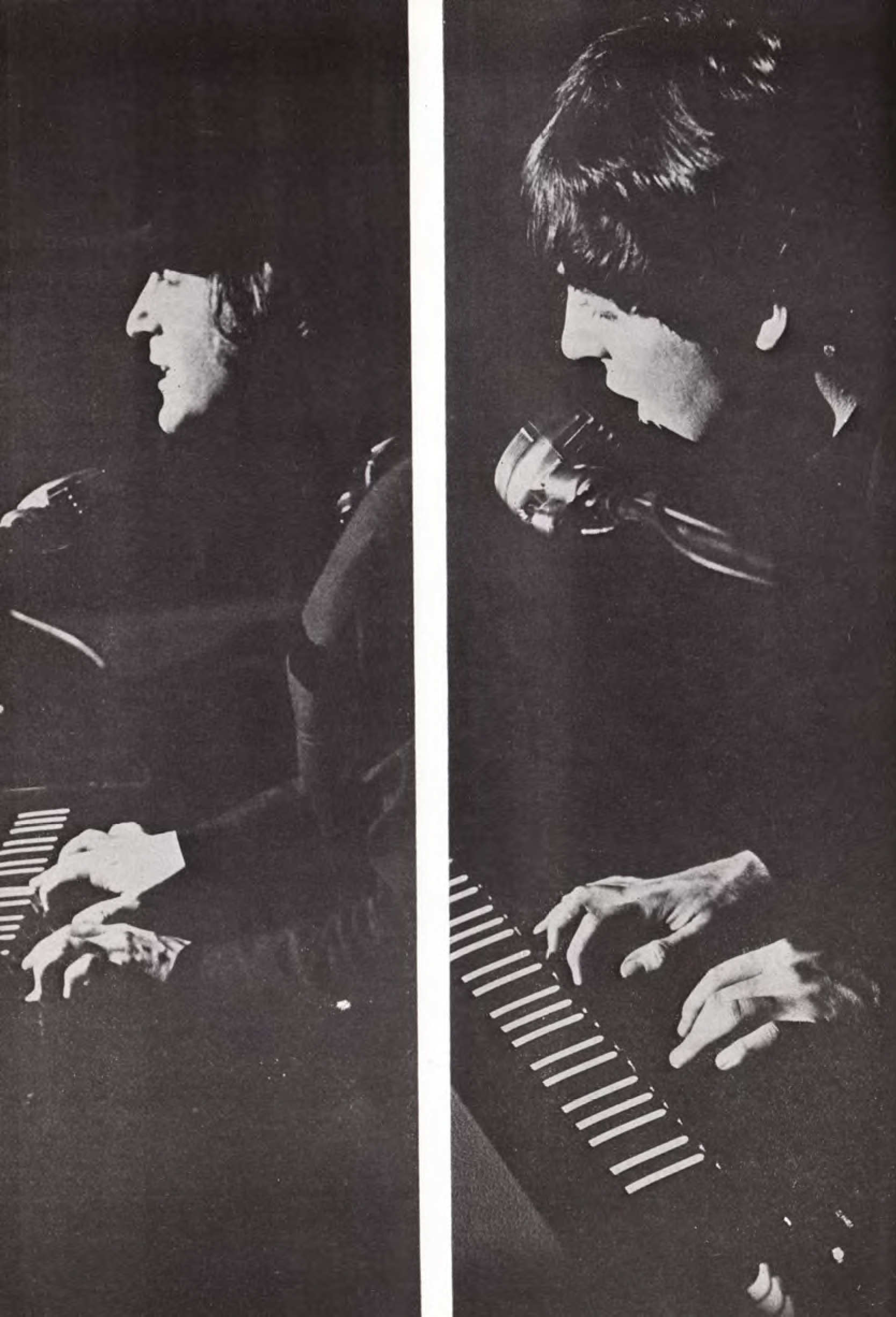
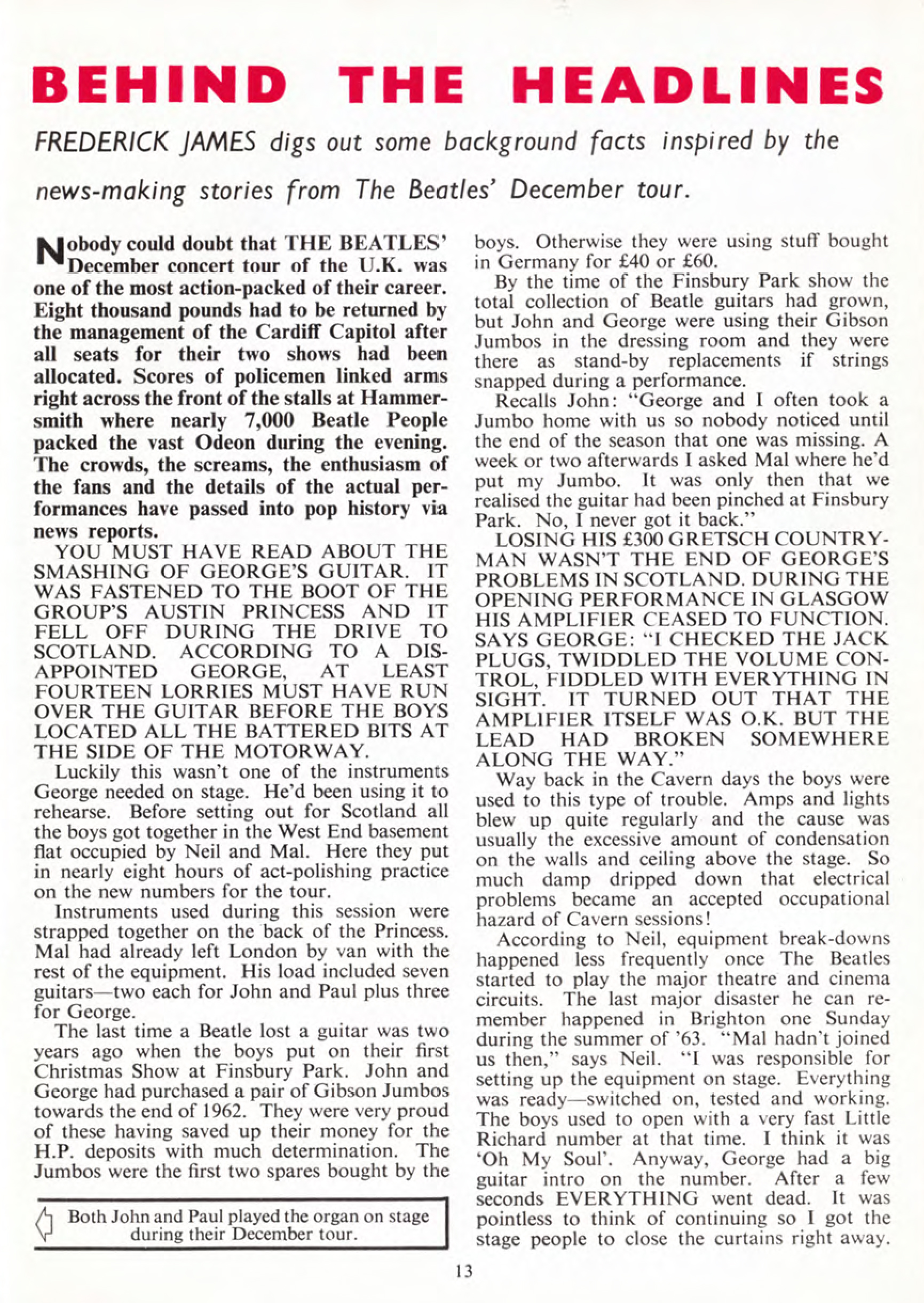
BEHIND THE HEADLINES
FREDERICK JAMES digs out some background facts inspired by the news-making stories from The Beatles’ December tour.
Nobody could doubt that THE BEATLES’ December concert tour of the U.K. was one of the most action-packed of their career. Eight thousand pounds had to be returned by the management of the Cardiff Capitol after all seats for their two shows had been allocated. Scores of policemen linked arms right across the front of the stalls at Hammersmith where nearly 7,000 Beatle People packed the vast Odeon during the evening. The crowds, the screams, the enthusiasm of the fans and the details of the actual performances have passed into pop history via news reports.
YOU MUST HAVE READ ABOUT THE SMASHING OF GEORGE’S GUITAR. IT WAS FASTENED TO THE BOOT OF THE GROUP’S AUSTIN PRINCESS AND IT FELL OFF DURING THE DRIVE TO SCOTLAND. ACCORDING TO A DISAPPOINTED GEORGE, AT LEAST FOURTEEN LORRIES MUST HAVE RUN OVER THE GUITAR BEFORE THE BOYS LOCATED ALL THE BATTERED BITS AT THE SIDE OF THE MOTORWAY.
Luckily this wasn’t one of the instruments George needed on stage. He’d been using it to rehearse. Before setting out for Scotland all the boys got together in the West End basement flat occupied by Neil and Mal. Here they put in nearly eight hours of act-polishing practice on the new numbers for the tour.
Instruments used during this session were strapped together on the back of the Princess. Mal had already left London by van with the rest of the equipment. His load included seven guitars—two each for John and Paul plus three for George.
The last time a Beatle lost a guitar was two years ago when the boys put on their first Christmas Show at Finsbury Park. John and George had purchased a pair of Gibson Jumbos towards the end of 1962. They were very proud of these having saved up their money for the H.P. deposits with much determination. The Jumbos were the first two spares bought by the boys. Otherwise they were using stuff bought in Germany for £40 or £60.
By the time of the Finsbury Park show the total collection of Beatle guitars had grown, but John and George were using their Gibson Jumbos in the dressing room and they were there as stand-by replacements if strings snapped during a performance.
Recalls John: “George and I often took a Jumbo home with us so nobody noticed until the end of the season that one was missing. A week or two afterwards I asked Mal where he’d put my Jumbo. It was only then that we realised the guitar had been pinched at Finsbury Park. No, I never got it back.”
LOSING HIS £300 GRETSCH COUNTRYMAN WASN’T THE END OF GEORGE’S PROBLEMS IN SCOTLAND. DURING THE OPENING PERFORMANCE IN GLASGOW HIS AMPLIFIER CEASED TO FUNCTION. SAYS GEORGE: “I CHECKED THE JACK PLUGS, TWIDDLED THE VOLUME CONTROL, FIDDLED WITH EVERYTHING IN SIGHT. IT TURNED OUT THAT THE AMPLIFIER ITSELF WAS O.K. BUT THE LEAD HAD BROKEN SOMEWHERE ALONG THE WAY.”
Way back in the Cavern days the boys were used to this type of trouble. Amps and lights blew up quite regularly and the cause was usually the excessive amount of condensation on the walls and ceiling above the stage. So much damp dripped down that electrical problems became an accepted occupational hazard of Cavern sessions!
According to Neil, equipment break-downs happened less frequently once The Beatles started to play the major theatre and cinema circuits. The last major disaster he can remember happened in Brighton one Sunday during the summer of ’63. “Mal hadn’t joined us then,” says Neil. “I was responsible for setting up the equipment on stage. Everything was ready—switched on, tested and working. The boys used to open with a very fast Little Richard number at that time. I think it was ‘Oh My Soul’. Anyway, George had a big guitar intro on the number. After a few seconds EVERYTHING went dead. It was getting too much of continuing so I got the stage people to close the curtains right away. I dashed on stage and we re-checked everything.“
A minute later all seemed to be well, the curtains were opened for a second time and George went into his hefty intro.
“Then, for a second time, everything just went dead,” recalls Neil. “It was ridiculous. We thought we were all going potty. This time John ran into the wings muttering something about the whole lot blowing up at any moment!”
The cause was traced to the drummer with one of the show’s other groups. Not to The Beatles’ amps or leads or speakers! This drummer was shifting his kit around behind the scenes and he’d dumped a heavy bass drum on the mains supply point. The fact that he broke circuit just after The Beatles started to play was pure coincidence.
THE TWO CONCERTS AT THE LIVERPOOL EMPIRE MUST HAVE BROUGHT BACK MANY MEMORIES FOR JOHN, PAUL, GEORGE AND RINGO.
It was at this theatre, on Sunday, 28 October 1962, that The Beatles made their first major concert appearance. They came on after The Breakaways as Item 3 in the first half of the programme. After doing just four numbers—including “Love Me Do” and “P.S. I Love You”—they stayed on stage to accompany Craig Douglas. The rest of the bill included Sounds Incorporated, Kenny Lynch and Jet Harris with Little Richard closing the show.
At the Empire on Sunday, 5 December 1965, they played to two capacity houses just as they had done over three years earlier. Again the audience included friends and relatives from various parts of Merseyside. The audience also included two little girls who managed to meet The Beatles backstage to discuss their Save-The-Cavern campaign.
A thousand shows—a thousand stories. But to the boys the most important performance is always the one they’re just about to do. And this Autumn Tour was no exception to the rule.
From The Beatles Monthly Book – January 1966
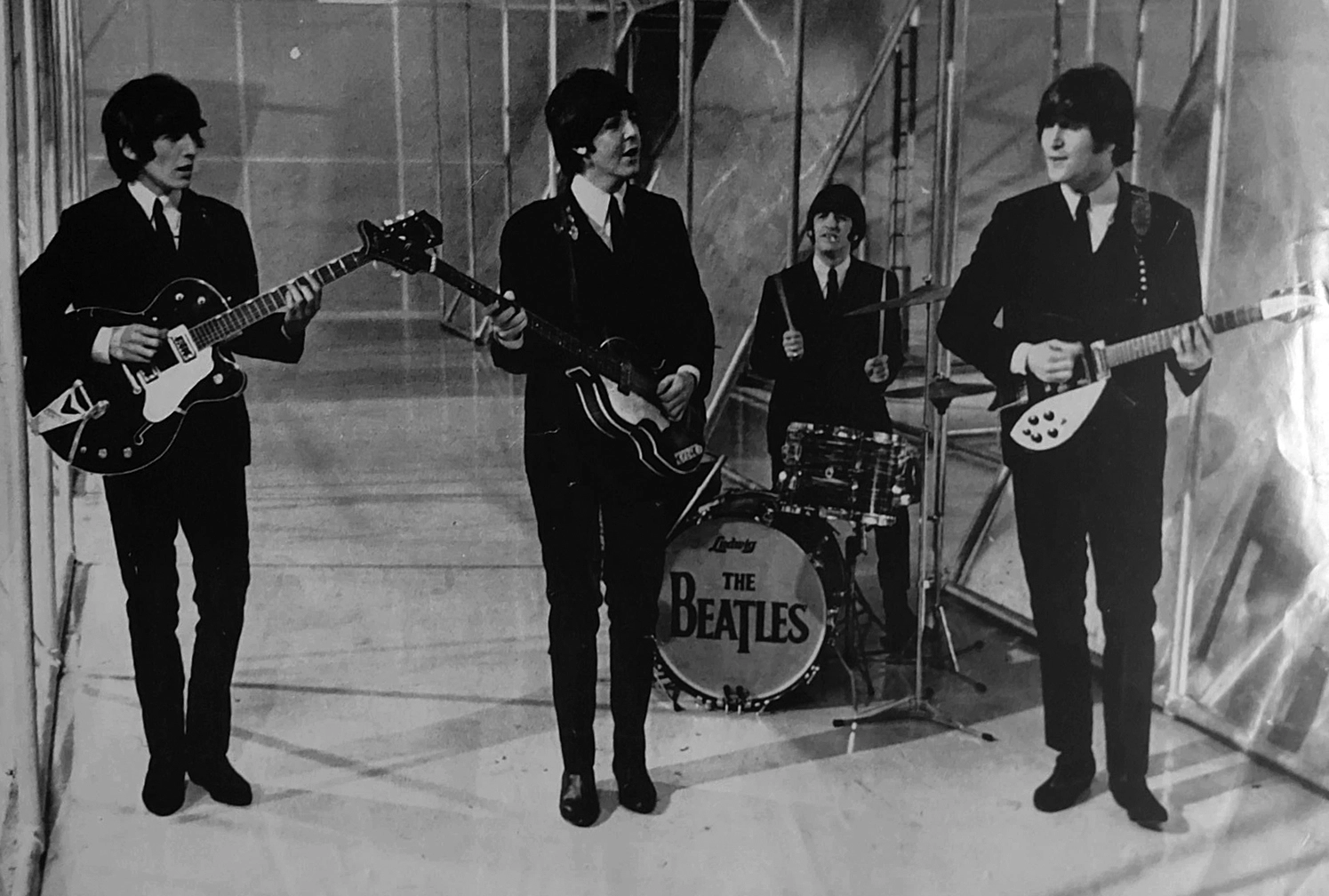
the beatles — A LIVING LEGEND
It has well been said that the Beatles “Love Me Do” and “I Want to Hold Your Hand” had as electrifying an effect upon the somewhat languishing style of modern pop music as did “Alexander’s Ragtime Band” and “Ragtime Cowboy Joe” on the sentimental balladry sobbed out by songsters in Edwardian parlours and the vernacular music-hall 50 years ago.
The highbrows who had put up a kind of fence around all things musical have again been disconcerted by the infectious spontaneity of the Merseyside beat.
What has brought such fame to John Lennon, Paul McCartney, George Harrison and Ringo Starr? Is it the startling reaction of the teenage devotees? Is it their nonchalant, uninhibited assurance? Is it the farsighted exploitation of the purveyors of pop records?
The real explanation, of course, goes much deeper. For one thing the Beatles, in one of those flashes of inspiration that find such tremendous public response, gathered up the loose ends strewn around by the crooners and dead-beats and gave the whole face of popular entertainment a new look, fresh vitality and clear, unmistakable form.
Whoever may be Top of the Pops for the moment — and show business has some peculiar angles — the Beatles always remain masters of the situation. They have advanced beyond competitive frontiers.
Imitation may be the sincerest form of flattery but although many mimics try to take the Beatles off, there are very few who would venture to take them on. From Moscow to Mexico and Australia to the Arctic the Beatles now mean something to millions of people. The lads from Liverpool have doubtless caused more traffic congestion and more mass hysteria than any others who have achieved fame in the entertainment world, but it has all worked to one end and that has been to establish them as the world’s most famous group.
So much has been packed into the last few years that it seems a very long call since John, Paul, George and Ringo served what might be looked upon as their apprenticeship on the threshold of fame and fortune in Germany. All four must have a soft spot for Hamburg where they gave the pleasure-seekers of the Reeperbahn, the city’s famous entertainment centre, a new kind of musical thrill. Some there may have been who looked upon them as crazy islanders, but they left their mark! George, in particular, who was then under age and therefore playing illegally, had the extra excitement of being chased around by the police and finally sent back to England. That was in 1960, but a year later they were back in Hamburg again and this time George had no permit problems.
“There is a tide in the affairs of men which if taken at the flood lead on to fortune.” Was the turning point in the Beatles’ career their first recording as the backing group to Tony Sheridan — called the Beat Boys on the label? In any case there has been a flood of recordings since that time. All along it has been a case of “nothing succeeds like success”. Ringo Starr, who had made his Hamburg debut in the Kaiserkellar with Rory Storm’s group, shaved off his beard and joined the Beatles in place of Pete Best on the drums in August 1962. Details of the group’s lives and adventures, their engagements and travels could fill volumes. Few people have been so photographed or written about.
No pipes of Pan ever attracted such a long, long trail of teenagers or enchanted so many mature folk. Everyone seemed to revel in the change from the stuffy state into which vocal and instrumental entertainment was falling into.
It was something that had a direct appeal, like a breath of fresh air. And it was strong enough to blow the Beatles to France, Sweden, the U.S.A., Canada, Denmark, Hong Kong, Australia, New Zealand, Italy and Spain.
Film-making was of course the next step. Public demand had now to be met in every possible way and on location in Austria, the Bahamas and London the Beatles got right down to some hard work in their new dimension. The move was a shrewd one for their films “A Hard Day’s Night” and “Help!” have done much to disabuse the minds of the classical die-hards who confused the art of the Liverpudlians with sex-appeal pure and simple and found their musical genius overlaid by the screams and moans of millions of adoring schoolgirls.
At first John and Paul formed part of an amateur group which practised in Paul’s front room. By 1957, George was playing with them on odd occasions. The following year when the group began to accept local dates on a slightly grander scale, George became a regular rather than a spasmodic member of the team. They appeared at dances, in church halls and youth clubs.
They did not know then that they would soon have the world at their feet but when Fate conspired to rope in Ringo the stage was all set for fame and fortune.
The homeland has had its full share of opportunities to see and hear the Beatles in the flesh as well as on the cinema and television screens. Among the highlights of their journeyings from 1963 were a tour of Scotland, a nation-wide tour on the Helen Shapiro Show, tours with Tommy Roe, Chris Montez, Gerry and The Pacemakers, Roy Orbison, Peter Jay and The Jaywalkers and The Brook Brothers. Before the end of 1963 the Beatles made a unique Juke Box Jury appearance televised from their Northern Fan Club Convention in Liverpool, and they had opened in their first Christmas show staged at Bradford, Liverpool and London.
1964 saw the spreading of the group’s fame to include almost every continent of the free world. Their overseas triumphs were massive, but none matched the wildly enthusiastic welcome which American and Canadian Beatle People gave to John, Paul, George and Ringo.
More recently, in June 1965, they ventured into Spain and Italy for the first time, returning to the United States in August for a further series of record-breaking concerts seen by well over 300,000 fans.
Authorship (John has written “John Lennon in his Own Write” and “A Spaniard in the Works”) and the bestowal on all four of the M.B.E. seem to have capped their achievements — at least so far.
And what of their personalities as individuals! John Winston Lennon who was born on October 9th, 1940, in Woolton, Liverpool, started his education at Dovedale Primary School and finished up at the Liverpool College of Art. He is the rhythm guitarist, but also plays the harmonica, organ and piano. He is married and has one son. His interests cover painting and sketching and playing records. He has a dry sense of humour and enjoys composing songs with Paul McCartney. John has a large house in Weybridge, Surrey, and also owns a Ferrari, a Volkswagen and a Mini. He has a few novel ideas about parties and likes barbecues even if they are out in the snow. He thinks a winter party outdoors is great fun when everyone wears their warmest and most colourful clothes.
James Paul McCartney first saw the light of day on June 18th, 1942, in Allerton, Liverpool. He evidently took his education seriously or at least seriously enough to get a General Certificate of Education in five subjects at “O” level and English literature at “A” level. His schooling was at Liverpool Institute. Paul plays bass guitar, the piano and banjo, sings solo and also vocal duets with John Lennon. He likes to alternate between casual clothes and smarter wear, owns a blue Aston Martin and a white Mini and enjoys steak and chips, fast cars and television. On the side he thinks up zany ideas, reads plays, is alert, cool and despises dishonesty. As to parties Paul puts the accent on food, indoors or out. His special tastes run to sausages and bacon rolls on sticks, kebabs, chicken, potatoes in their jackets and roast chestnuts.
Born on February 25th, 1943, in Speke, Liverpool, George Harrison attended Dovedale Primary School and, in due course, Liverpool Institute where he showed talent for art. He plays lead guitar and the piano, owns a large bungalow in Surrey, a white Aston Martin and a green Mini. His hobbies are cars, television and films of the Hitchcock thriller type. Incidentally George worked for a short spell as apprentice to an electrical firm. When it comes to parties he wants lots of music — rhythm and blues.
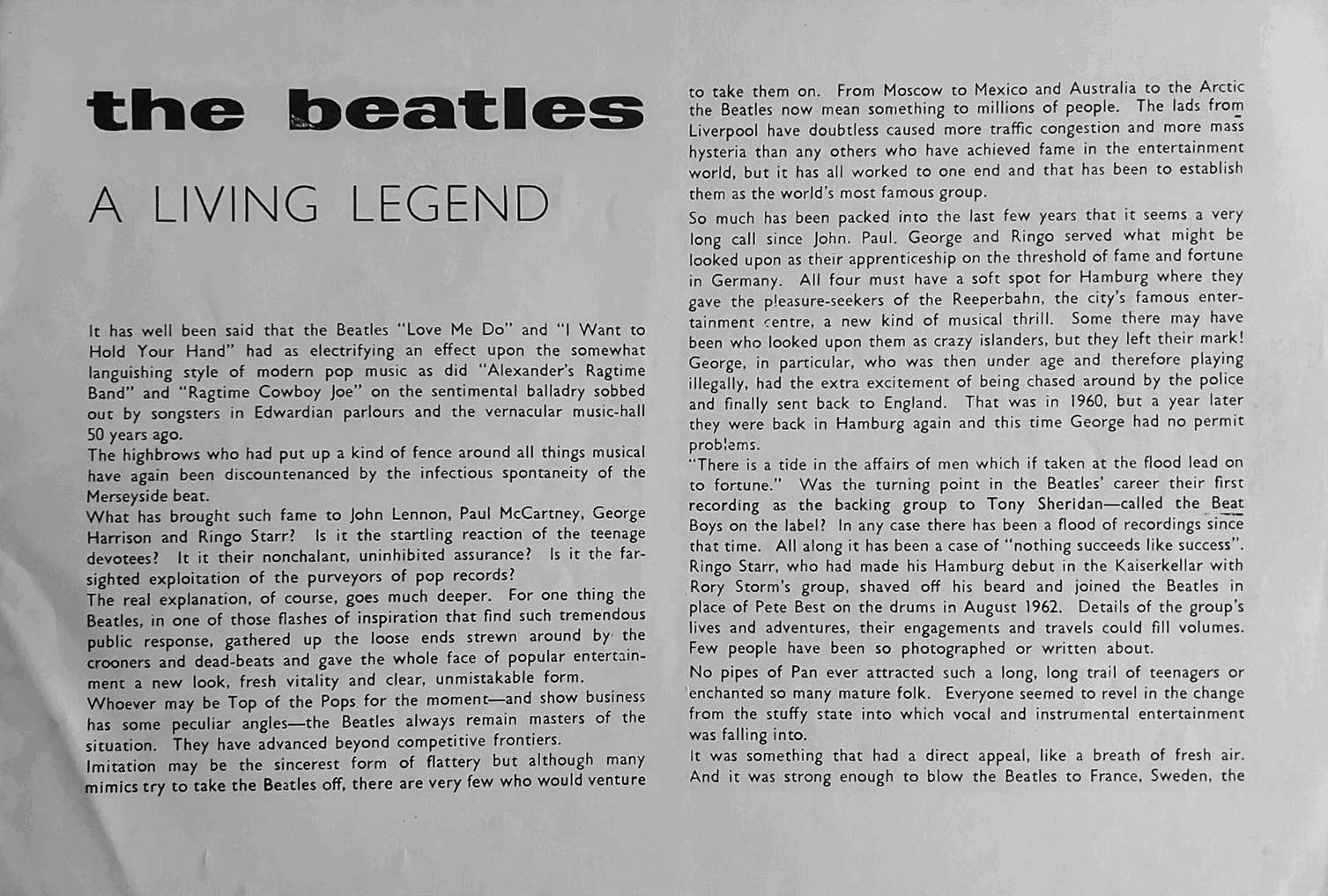
In the literal sense Ringo Starr is the group’s blue-eyed boy — each of his comrades have brown eyes. He was born on July 7th, 1940, in Dingle, Liverpool, and was educated at St. Silas’ School, Dingle Vale Secondary and Riversdale Technical College. At Dingle Vale he was classmate with Billy Fury. His real name is Richard Starkey but his interest in rings, of which he has a large collection, gained him the nickname, Ringo. He, too, worked for a time as an apprentice, but as an engineer. Ringo plays drums, an accomplishment evidently fostered by his parents who presented him with his first drum kit. Ringo, too, is a married man and in his case he had to get up early for his wedding which was at 8.15 a.m. on February 11th of this year. He has a flat in London, likes fast cars and owns a maroon Facel Vega, a maroon Rolls Royce and a Mini. He is of a quiet, relaxed disposition and favours black suits. For all that he has some lively suggestions for brightening up parties. He prefers to introduce some kind of gimmick even if everyone is expected to turn up as cow-puncher or Redskin!
And what about the faithful fans up and down the country? Far from representing isolated groups the huge following has developed into a tremendous organisation. In earlier days Freda Kelly operated the National Fan Club from Liverpool. Later the membership increased so fast that central Headquarters were required in London. Today a full-time office staff copes with the club’s fantastic volume of mail and there is a network of voluntary area secretaries covering each individual county throughout the United Kingdom.
Secretary of the Official Beatles Fan Club, says: “It has been a truly wonderful year for the Beatles and we are all more than confident that they will be staying close to the top of the charts for many years to come”.
Since the days of “Love Me Do” and “Please Please Me” the Beatles have made extraordinary progress instrumentally and vocally. On the composing side they have developed the creative talent to fresh peaks as those who have heard such songs as “Nowhere Man”, “Norwegian Wood”, “Girl” and George’s “If I Need Someone”—all featured on the new “Rubber Soul” Album released this month—will appreciate the full measure of the song writing ability contained within the group.
What more can they achieve now that they have reached such a pinnacle of fame? The probable answer is that for John, Paul, George and Ringo there can be little rest. Life, or at least the full flavour of it, must consist of action and it would seem that their most fitting motto would be “Forget the past, grip the present and plan for the future”.
The true artist has a destiny to fulfil and in the creative world of music the sky’s the limit.
The Beatles are almost a national institution. They are also businessmen with important commitments.
Without doubt there will be plenty more exciting and ingenious outpourings and many more places to visit in the years to come. Bigger triumphs than ever, perhaps, for it has been confidently predicted that one day they will break into theatreland and put on a West End stage musical of their own.
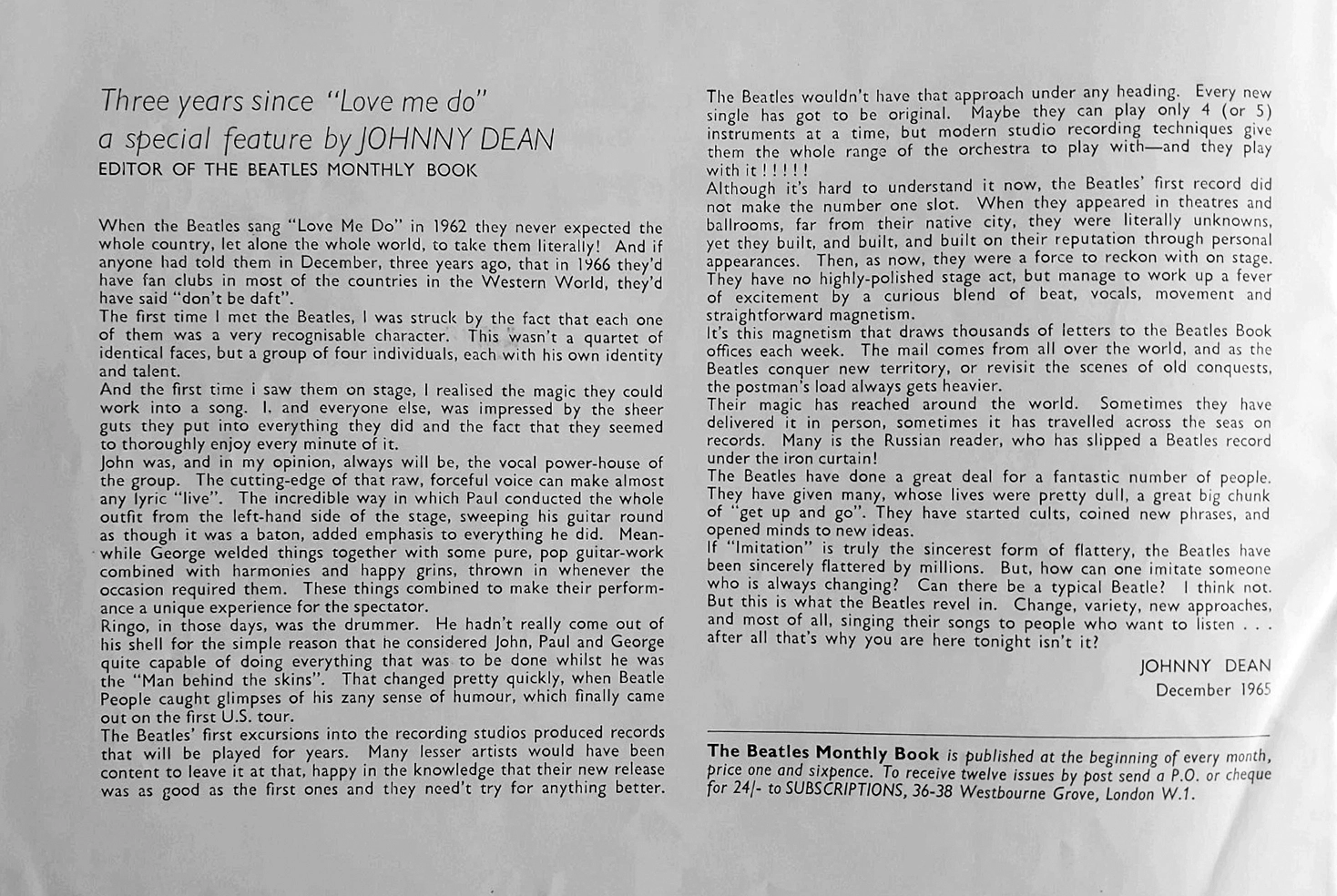
From The Beatles’ 1965 UK Tour Programme






Dec 03, 1965 • 6:15pm show
Dec 03, 1965 • 9pm show
UK • Newcastle upon Tyne • Newcastle City Hall
Dec 04, 1965 • 6:30pm show
UK • Newcastle upon Tyne • Newcastle City Hall
Dec 04, 1965 • 8:45pm show
UK • Liverpool • Empire Theatre
Dec 05, 1965 • 5:40pm show
UK • Liverpool • Empire Theatre
Dec 05, 1965 • 8pm show
Dec 07, 1965 • 6:30pm show
Dec 07, 1965 • 8:45pm show
UK • Sheffield • Gaumont Theatre
Dec 08, 1965 • 6:15pm show
UK • Sheffield • Gaumont Theatre
Dec 08, 1965 • 8:50pm show
UK • Birmingham • Odeon Cinema
Dec 09, 1965 • 6:45pm show
UK • Birmingham • Odeon Cinema
Dec 09, 1965 • 9:15pm show
UK • London • Hammersmith Odeon
Dec 10, 1965 • 9pm show
UK • London • Hammersmith Odeon
Dec 10, 1965 • 6:45pm show
Dec 11, 1965 • 6:40pm show
Dec 11, 1965 • 9pm show
UK • Cardiff • Capitol Theatre
Dec 12, 1965 • 5:30pm show
UK • Cardiff • Capitol Theatre
Dec 12, 1965 • 8pm show

Notice any inaccuracies on this page? Have additional insights or ideas for new content? Or just want to share your thoughts? We value your feedback! Please use the form below to get in touch with us.


