Saturday, April 26, 1969
Recording "Oh! Darling", "Octopus's Garden"
For The Beatles
Last updated on April 4, 2025
Saturday, April 26, 1969
For The Beatles
Last updated on April 4, 2025

Feb 22 - Aug 25, 1969 • Songs recorded during this session appear on Abbey Road
Recording studio: EMI Studios, Studio Two, Abbey Road • London • UK
Session Apr 20, 1969 • Recording and mixing "I Want You (She's So Heavy)", "Oh! Darling"
Session Apr 25, 1969 • Mixing "Two Of Us"
Session Apr 26, 1969 • Recording "Oh! Darling", "Octopus's Garden"
Session Apr 29, 1969 • Recording and mixing "Octopus's Garden"
Article Wednesday, April 30, 1969 ? • "The Ballad of John and Yoko" photo session
AlbumSome of the songs worked on during this session were first released on the "Abbey Road" LP
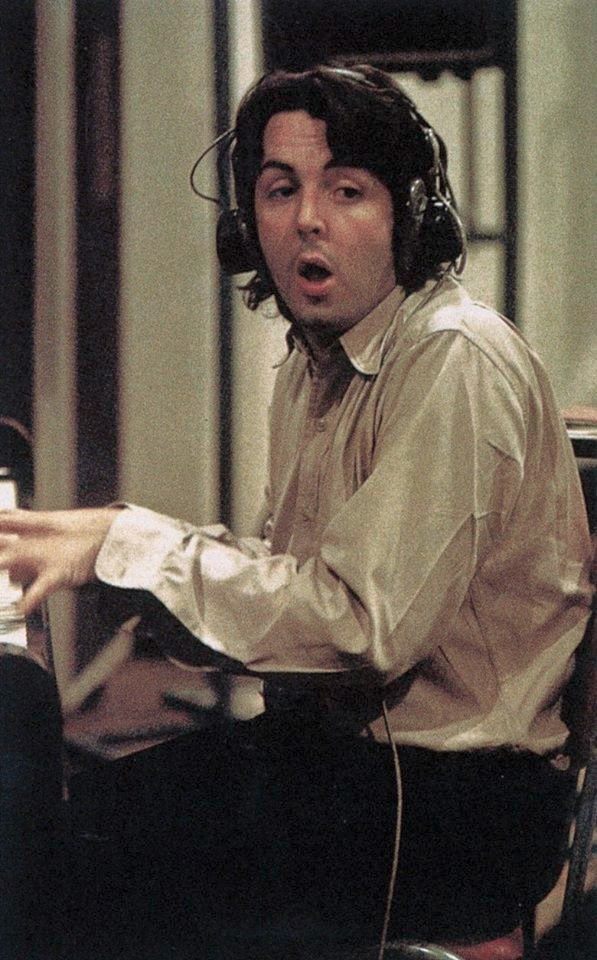
This 4:30 pm to 4:15 am session started with Paul McCartney recording his first lead vocal for his composition “Oh! Darling“, wiping Billy Preston’s organ recorded on April 20 in the process.
Paul would re-record this lead vocal on July 17, 18, 22 and 23 to reach the desired quality.
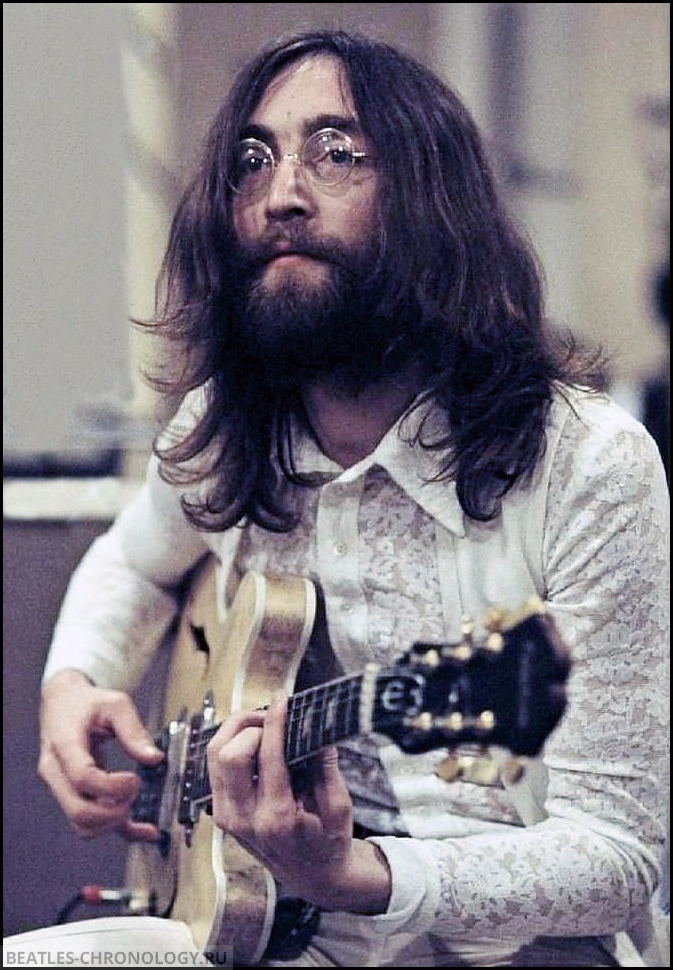
The Beatles then work on Ringo Starr’s composition “Octopus’s Garden“. After some rehearsals to perfect the arrangement, they recorded 32 takes of the backing track, with Paul on bass (track one), Ringo on drums (track two) and guide vocals (track eight), George Harrison on electric guitar (track three) and John Lennon on rhythm guitar (track four).
Take 2 was released on “Anthology 3” in 1996.
In August 1968, two months after recording his first solo song composition Don’t Pass Me By, Ringo took a break from the White Album sessions and, while on holiday, was inspired to begin writing a second number, Octopus’s Garden. The piece developed over the next few months and, in April 1969, the Beatles recorded the basic track for Abbey Road. Knowing that he would re-record his vocal as an overdub, Ringo sang a guide while playing the drums, with Paul contributing bass and John and George guitars. The master, Take 32, was brimful of added sound effects and backing vocals, but this Anthology selection is Take 2, concluding with a humorously ironic statement from the end of Take 8.
From the liner notes of “Anthology 3“
The incomplete take 9 was released on “Abbey Road (50th anniversary boxset)” in 2019.
Take 32 was considered to be the best and would receive its first overdubs on April 29, 1969.
Recording • SI onto take 26
Written by Ringo Starr
Recording • Take 1
Written by Ringo Starr
Recording • Take 2
AlbumOfficially released on Anthology 3
Written by Ringo Starr
Recording • Take 3
Written by Ringo Starr
Recording • Take 4
Written by Ringo Starr
Recording • Take 5
Written by Ringo Starr
Recording • Take 6
Written by Ringo Starr
Recording • Take 7
Written by Ringo Starr
Recording • Take 8
Written by Ringo Starr
Recording • Take 9
AlbumOfficially released on Abbey Road (50th anniversary boxset)
Written by Ringo Starr
Recording • Take 10
Written by Ringo Starr
Recording • Take 11
Written by Ringo Starr
Recording • Take 12
Written by Ringo Starr
Recording • Take 13
Written by Ringo Starr
Recording • Take 14
Written by Ringo Starr
Recording • Take 15
Written by Ringo Starr
Recording • Take 16
Written by Ringo Starr
Recording • Take 17
Written by Ringo Starr
Recording • Take 18
Written by Ringo Starr
Recording • Take 19
Written by Ringo Starr
Recording • Take 20
Written by Ringo Starr
Recording • Take 21
Written by Ringo Starr
Recording • Take 22
Written by Ringo Starr
Recording • Take 23
Written by Ringo Starr
Recording • Take 24
Written by Ringo Starr
Recording • Take 25
Written by Ringo Starr
Recording • Take 26
Written by Ringo Starr
Recording • Take 27
Written by Ringo Starr
Recording • Take 28
Written by Ringo Starr
Recording • Take 29
Written by Ringo Starr
Recording • Take 30
Written by Ringo Starr
Recording • Take 31
Written by Ringo Starr
Recording • Take 32
The Complete Beatles Recording Sessions • Mark Lewisohn
The definitive guide for every Beatles recording sessions from 1962 to 1970. We owe a lot to Mark Lewisohn for the creation of those session pages, but you really have to buy this book to get all the details - the number of takes for each song, who contributed what, a description of the context and how each session went, various photographies... And an introductory interview with Paul McCartney!
The Beatles Recording Reference Manual: Volume 5: Let It Be through Abbey Road (1969 - 1970)

The fifth and final book of this critically acclaimed series, "The Beatles Recording Reference Manual: Volume 5: Let It Be through Abbey Road (1969 - 1970)" follows The Beatles as they "get back to where they once belonged...". Not once, but twice. With "Let It Be", they attempted to recapture the spontaneity of their early years and recordings, while "Abbey Road" was a different kind of return - to the complexity, finish and polish that they had applied to their work beginning with "Revolver" and through to "The Beatles".
Solid State: The Story of "Abbey Road" and the End of the Beatles
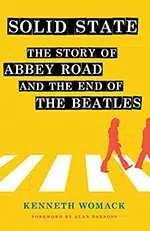
Acclaimed Beatles historian Kenneth Womack offers the most definitive account yet of the writing, recording, mixing, and reception of Abbey Road. In February 1969, the Beatles began working on what became their final album together. Abbey Road introduced a number of new techniques and technologies to the Beatles' sound, and included "Come Together," "Something," and "Here Comes the Sun," which all emerged as classics.
If we modestly consider the Paul McCartney Project to be the premier online resource for all things Paul McCartney, it is undeniable that The Beatles Bible stands as the definitive online site dedicated to the Beatles. While there is some overlap in content between the two sites, they differ significantly in their approach.

Notice any inaccuracies on this page? Have additional insights or ideas for new content? Or just want to share your thoughts? We value your feedback! Please use the form below to get in touch with us.


