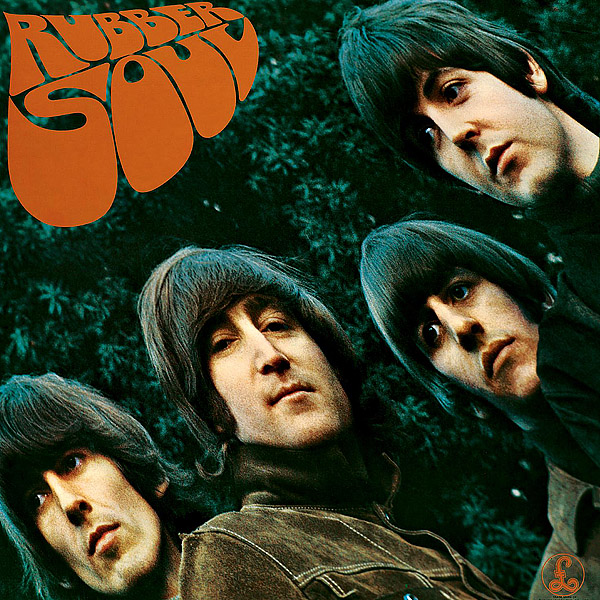
Album This song officially appears on the Rubber Soul (UK Mono) LP.
Timeline This song was officially released in 1965
This song was recorded during the following studio sessions:

Paul McCartney spoke about Pet Sounds
Mar 10, 1990

December 1990 • From Club Sandwich

May 05, 2001 • From TV Guide

Paul McCartney on acoustic guitar - "I never learned the proper way of picking"
2004 • From musicradar
December 2004 • From Guitar World Acoustic

Pete Doherty meets Paul McCartney
Oct 14, 2007 • From The Observer

May 26, 2010 • From The Telegraph

Paul McCartney discusses songwriting and RAM with Mansun's Paul Draper
May 28, 2012 • From Drowned In Sound

Paul and Lily Cole Discuss 'Hope For The Future'
Nov 19, 2014 • From paulmccartney.com
From Wikipedia:
“Michelle” is a song by the English rock band the Beatles from their 1965 album Rubber Soul. It was composed principally by Paul McCartney, with the middle eight co-written with John Lennon. The song is a love ballad with part of its lyrics sung in French.
Following its inclusion on Rubber Soul, the song was released as a single in some European countries and in New Zealand, and on an EP in France, in early 1966. It was a number 1 hit for the Beatles in Belgium, France, Norway, the Netherlands and New Zealand. Concurrent recordings of the song by David and Jonathan and the Overlanders were similarly successful in North America and Britain, respectively. “Michelle” won the Grammy Award for Song of the Year in 1967 and has since become one of the most widely recorded of all Beatles songs.
Composition
The instrumental music of “Michelle” originated separately from the lyrical concept. According to McCartney:
“Michelle” was a tune that I’d written in Chet Atkins’ finger-picking style. There is a song he did called “Trambone” with a repetitive top line, and he played a bass line while playing a melody. This was an innovation for us; even though classical guitarists had played it, no rock ‘n’ roll guitarists had played it. The first person we knew to use finger-picking style was Chet Atkins … I never learned it. But based on Atkins’ “Trambone”, I wanted to write something with a melody and a bass line in it, so I did. I just had it as an instrumental in C.
The words and style of “Michelle” have their origins in the popularity of Parisian Left Bank culture during McCartney’s Liverpool days. In his description, “it was at the time of people like Juliette Greco, the French bohemian thing.” McCartney had gone to a party of art students where a student with a goatee and a striped T-shirt was singing a French song. He soon wrote a farcical imitation to entertain his friends that involved French-sounding groaning instead of real words. The song remained a party piece until 1965, when John Lennon suggested he rework it into a proper song for inclusion on Rubber Soul.
McCartney asked Jan Vaughan, a French teacher and the wife of his old friend Ivan Vaughan, to come up with a French name and a phrase that rhymed with it. McCartney said: “It was because I’d always thought that the song sounded French that I stuck with it. I can’t speak French properly so that’s why I needed help in sorting out the actual words.“
Vaughan came up with “Michelle, ma belle”, and a few days later McCartney asked for a translation of “these are words that go together well”, rendered, for scansion, as sont des mots qui vont très bien ensemble (“are words that go very well together”). When McCartney played the song for Lennon, Lennon suggested the “I love you” bridge. Lennon was inspired by a song he heard the previous evening, Nina Simone’s version of “I Put a Spell on You”, which used the same phrase but with the emphasis on the last word, “I love you“.
Each version of this song has a different length. The UK mono mix is 2:33 whereas the stereo version extends to 2:40 and the US mono is 2:43. The version available in The Beatles: Rock Band has a running time of 2:50.
Musical structure
The song was initially composed in C, but was played in F on Rubber Soul (with a capo on the fifth fret). The verse opens with an F major chord (“Michelle” – melody note C) then the second chord (on “ma belle” – melody note D♭) is a B♭7♯9 (on the original demo in C, the second chord is a F7♯9). McCartney called this second chord a “great ham-fisted jazz chord” that was taught to them by Jim Gretty who worked at Hessey’s music shop in Whitechapel, central Liverpool and which George Harrison uses (as a G♭7♯9) (see Dominant seventh sharp ninth chord) as the penultimate chord of his solo on “Till There Was You“. After the E♭6 (of “these are words”) there follows an ascent involving different inversions of the D dim chord. These progress from A♭dim on “go” – melody note F, bass note D; to Bdim (C♭dim) on “to” – melody note A♭, bass note D; to Ddim on “ge …” – melody note B (C♭) bass note B; to Bdim on … ‘ther …” – melody note A♭ bass note B, till the dominant (V) chord (C major) is reached on “well” – melody note G bass note C.
George Martin, the Beatles’ producer, recalled that he composed the melody of the guitar solo, which is heard midway through the song and again during the fadeout. He showed Harrison the notes during the recording session and then accompanied the guitarist (on piano, out of microphone range) when the solos were overdubbed. In terms of its complementary role to the main melody, musicologist Walter Everett likens this guitar part to two musical passages that Martin had arranged for singer Cilla Black the previous year: a bassoon–English horn combination on “Anyone Who Had a Heart” and the baritone electric guitar on “You’re My World”.
Release
EMI’s Parlophone label released Rubber Soul on 3 December 1965 in Britain, with “Michelle” sequenced as the final track on side one of the LP. The album was widely viewed as marking a significant progression within the Beatles’ work and in the scope of pop music generally. Recalling the album’s release for Mojo magazine in 2002, Richard Williams said “Michelle” represented “the biggest shock of all” to a contemporary pop audience, as McCartney conveyed “all his nostalgia for a safe childhood in the 1950s, itself a decade suffused with nostalgia for the inter-war security of the ’20s and ’30s, the era to which this song specifically refers.”
Although no single from Rubber Soul was issued in Britain or America, “Michelle” was the most popular Rubber Soul track on US radio. The song was released as a commercial single in several other countries. It topped charts in Italy (for eight weeks), the Netherlands (seven weeks), Sweden (five weeks), Denmark (four weeks) and Hong Kong, Ireland, New Zealand and Singapore. In May 1966, Billboard‘s Hits of the World listed the song at number 1 in Argentina and Norway, among other countries. It was also number 1 in France for five weeks as the lead track on an EP release, since France continued to favour the extended-play format over singles.
At the 1967 Ivor Novello Awards, “Michelle” won in the category of “the Most Performed Work” of 1966, ahead of “Yesterday”. “Michelle” won the Grammy Award for Song of the Year in 1967, against competition from “Born Free”, “The Impossible Dream”, “Somewhere My Love” and “Strangers in the Night”. In 1999, BMI named “Michelle” as the 42nd most performed song of the 20th century.
Critical reception
In a contemporary review for the NME, Allen Evans described “Michelle” as a “memorable track” with a “bluesy French sound” in which McCartney’s vocal was supported by “[the] others using voices as instruments”. Record Mirror‘s reviewer admired the lyrics and said that the song was “just remotely, faintly, slightly similar to ‘Yesterday’ in the general approach” and “another stand-out performance”. Eden of KRLA Beat described “Michelle” as a “beautiful ballad”, adding: “Although it doesn’t sound at all like his fantastic ‘Yesterday’, it is another tender love song, sung as only Paul could sing it. He even croons the choruses in French – and what better language for a love song?” Jazz critic and broadcaster Steve Race admitted being “astonished” by the album, and added “When I heard ‘Michelle’ I couldn’t believe my ears. The second chord is an A-chord, while the note in the melody above is A-flat. This is an unforgivable clash, something no one brought up knowing older music could ever have done. It is entirely unique, a stroke of genius … I suppose it was sheer musical ignorance that allowed John and Paul to do it, but it took incredible daring.”
Among the Beatles’ peers, Bob Dylan, whose work was especially influential on Lennon and Harrison’s songwriting on Rubber Soul, was dismissive of McCartney’s ballad style. In March 1966, he said: “A song like ‘Yesterday’ or ‘Michelle’ … it’s such a cop-out, man … if you go to the Library of Congress you can find a lot better than that. There are millions of songs like ‘Yesterday’ and ‘Michelle’ written in Tin Pan Alley.” Levi Stubbs of the Four Tops, an American vocal group promoted in the UK by Beatles manager Brian Epstein, cited the song as an example of the sophistication the Beatles had introduced into pop music. He said that the US music scene had been “very dead-beat” and “stagnant” before the arrival of the British Invasion, after which: “Good music became accepted. Would ‘Michelle’ have been a hit before the Beatles? Of course not.”
From 1970, McCartney’s standing among music critics suffered as the authentic rock ‘n’ roll qualities personified by Lennon came to be valued over his former bandmate’s more eclectic tastes. In his 1979 essay on the Beatles in The Rolling Stone Illustrated History of Rock & Roll, Greil Marcus said that Rubber Soul was the best of all the band’s LPs and that “every cut was an inspiration, something new and remarkable in and of itself” except “Michelle”, although he added, “to be fair, [it] paid the bills for years to come”. […]
McCartney live performances
“Michelle” was performed by McCartney throughout his 1993 world tour. He has rarely performed the song since, but did include it in a 2009 performance in Washington, DC, in honour of Michelle Obama, the American First Lady, and he would play it on most (if not all) of his performances in France or other francophone countries.
On 2 June 2010, after being awarded the Gershwin Prize for Popular Song by President Barack Obama in a ceremony at the White House, McCartney performed the song for Michelle Obama, who sang along from her seat. McCartney quipped, “I could be the first guy ever to be punched out by a president.” Michelle Obama reportedly later told others that she could never have imagined, growing up an African-American girl on the South Side of Chicago, that someday a Beatle would sing “Michelle” to her as First Lady of the United States. […]
John, being older and at art school, would take me to art school parties. I remember going to one and sitting in the corner with my black polo-neck sweater on, trying to look interesting to this older crowd. I had the acoustic guitar with me, and I was playing a French-sounding song and making guttural noises. I was half hoping that someone would think I was French, possibly even a French intellectual. So that’s where it all started, with my memory of having this faux French song that must have been influenced by Édith Piaf’s ‘Milord’, a big hit in 1959.
Paul McCartney – From “The Lyrics: 1956 to the Present“, 2021
I used to play it at parties, these really arty, bohemian parties. We used to have them and we’d be hanging out and being very far out and there’d always be a guy in the corner with a guitar. So, I used to pretend I was French, ‘Michelle, ma belle, jou jou jou,’ and nobody knew the difference. But that later got developed into a song.
Paul McCartney – From “The Beatles: Off the Record” by Keith Badman, 2008
We’d just put out ‘Michelle’ and I remember one night at the Ad Lib club David Bailey hearing it and saying, ‘You’ve got to be joking – it is tongue in cheek, isn’t it?’ My reaction was: ‘Piss off! That’s a real tune,’ and I was quite surprised that he’d think that. Looking at the Sixties now, I can see why he did, because everything was very ‘Needles And Pins’, ‘Please Please Me’, and suddenly – ‘Michelle’. It came a bit out of left field, but those are often my favourites. I mean, one of Cliff Richard’s best ones was ‘Living Doll’. When he came out with that it was quite a shock, with its acoustics; but it was a well-formed little song.
Paul McCartney – From “The Beatles Anthology” book, 2000
I wrote the middle eight of ‘Michelle’, one of Paul’s songs. He and I were staying somewhere and he walked in and hummed the first few bars, with the words, and he says, ‘Where do I go from here?’ I had been listening to Nina Simone – I think it was ‘I Put A Spell On You’. There was a line in it that went: ‘I love you, I love you, I love you’. That’s what made me think of the middle eight: ‘I love you, I love you, I love you’.
John Lennon – From “The Beatles Anthology” book, 2000
In the Beatles period we were looking for new songs, and John once said to me, ‘Remember that daft French thing you used to do at parties?’ I happened to meet up with Ivan Vaughan, who was probably my best friend in school. By then he’d been to University College London to study the classics. He and his wife Jan lived in Islington, and I used to visit them. Jan taught French, so I asked if she could think of a rhyme for ‘Michelle’, two syllables. She said ‘Ma belle’. So, how could I say ‘these words go together’ in French? So, Jan also gave me ‘sont les mots qui vont très bien ensemble’.
Paul McCartney – From “The Lyrics: 1956 to the Present“, 2021
Paul asked me if I could think of a French girl’s first name, with two syllables, and then a description of the girl, which would rhyme. He played me the rhythm on his guitar and that’s when I came up with ‘Michelle. Ma belle’. Some days later, he phoned me up and asked me if I could translate the phrase, ‘These are words that go together well.’
Jan – French language teacher and Ivan Vaughan’s wife – From “The Beatles: Off the Record” by Keith Badman, 2008
As Paul put it, “We all wanted to be Sacha Distel”—he was right about that, and I shall tell you why. It was not so much because Monsieur Distel was cool and handsome, a fine guitarist, and a good singer—it was because he was, at the time, the live-in boyfriend of Brigitte Bardot, with whom we were all hopelessly in love. I maintain to this day that the BB of that era was the most physically attractive woman I have ever seen. I think the Beatles finally did meet her in person (I never had the pleasure) after one of their Olympia shows. So, this may account for at least some of Paul’s interest in the French language. But he did not actually speak it, so when he decided to write some cool French lyrics, he needed help. He went first to Jan Vaughan, the wife of a friend, who spoke fluent French, and she made suggestions and translated some phrases for him initially. I also remember Paul conferring with my mother, who spoke very good French, having been educated at the Lycée Français in London. I recall my mother telling me that Paul had consulted her on some French he was using in a song, and it must have been this song because it is the only Beatles song which includes any French words. So, I think my mother had a hand in helping him with the correct French grammar or pronunciation or something like that.
Peter Asher – From “The Beatles from A to Zed: An Alphabetical Mystery Tour“, 2019
From The Usenet Guide to Beatles Recording Variations:
- [a] mono 9 Nov 1965.
US: Capitol T 2442 Rubber Soul 1965.- [b] stereo 9 Nov 1965.
UK: Parlophone PCS 3075 Rubber Soul 1965, Parlophone PCS 7016 Collection of Oldies 1966, Apple PCSP 717 The Beatles 1962-1966 1973.
US: Capitol ST 2442 Rubber Soul 1965, Apple SKBO-3403 The Beatles 1962-1966 1973.- [c] mono 15 Nov 1965.
UK: Parlophone PMC 1267 Rubber Soul 1965, Parlophone PMC 7016 Collection of Oldies 1966.
CD: EP Box set 1991.- [d] stereo 1987.
CD: EMI CDP 7 46440 2 Rubber Soul 1987, EMI CDP 7 97036 2 The Beatles 1962-1966 1993.[a] has louder percussion than [b], and fades a little longer.
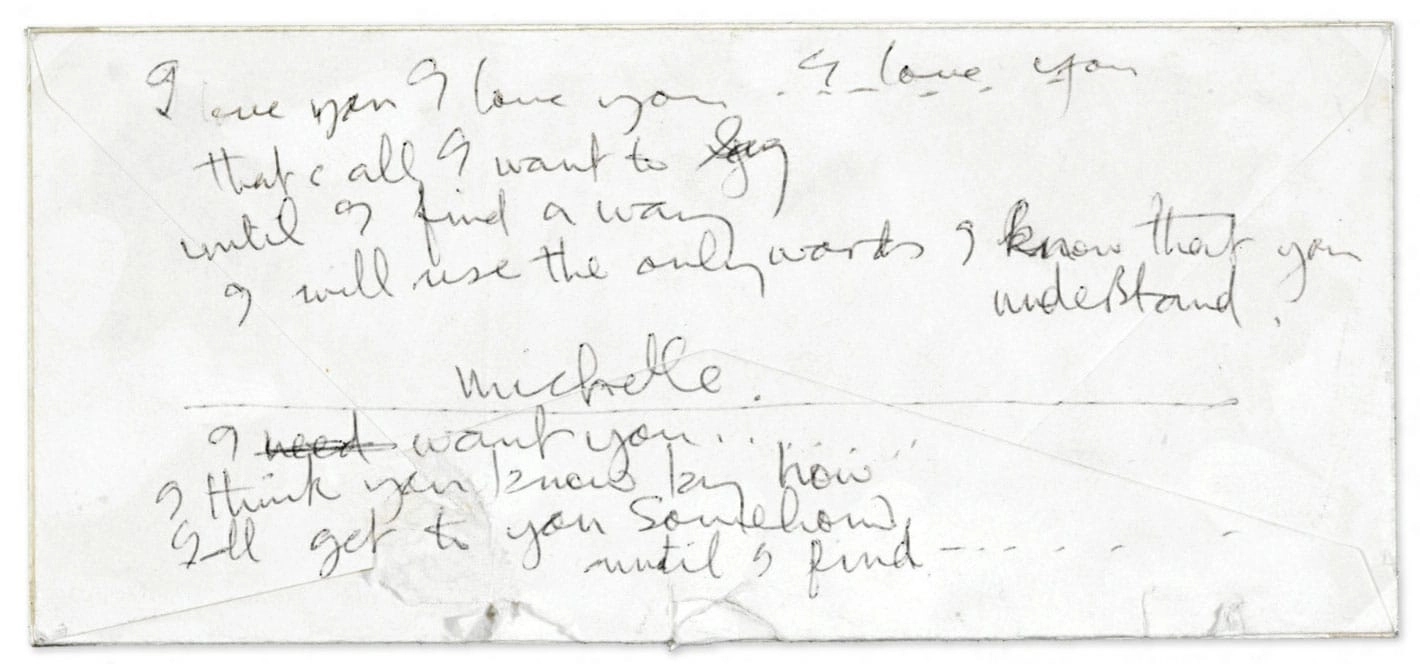
MICHELLE: SONG OF ’66 ? Another ‘Yesterday’ for John and Paul
WITH dawn barely breaking over the New Year, the Lennon–McCartney song, “Michelle” has already staked a claim to be the biggest song sensation of 1966!
Says Beatles music publisher Dick James: “Already there are over 20 different versions of the song recorded by artists in all parts of the world — France, Germany, Spain, America and Britain. And right now, a battle royal is raging in the American charts between Britain’s David and Jonathan in Billboard’s Hot 100 at 98 and America’s Billy Vaughn, in at 96. Other stars are also jumping on the band wagon. I’ll go on record in predicting that ‘Michelle’ will be every bit as big as ‘Yesterday’ — undoubtedly the outstanding song of the old year.”
Adds James: “No one was more surprised than Paul McCartney that ‘Yesterday’ was such a smash hit.”
“When it was issued as a single by the Beatles in the States, it shot right to the top and the LP track also became a tremendous hit there — plus the single version by Matt Monro and Marianne Faithfull. Now the same pattern is repeating itself with ‘Michelle’. And there isn’t the time lag with this that there was with ‘Yesterday’. Although Rubber Soul album was only released on December 10, people are rushing to record ‘Michelle’. It has already been recorded on new British singles by David and Jonathan and the Overlanders. At this stage, there’s no knowing what the final total of recordings will be. That’s why I’m confident that ‘Michelle’ will be every bit as big as ‘Yesterday’. Maybe even bigger!”
From Disc Weekly, January 8, 1966
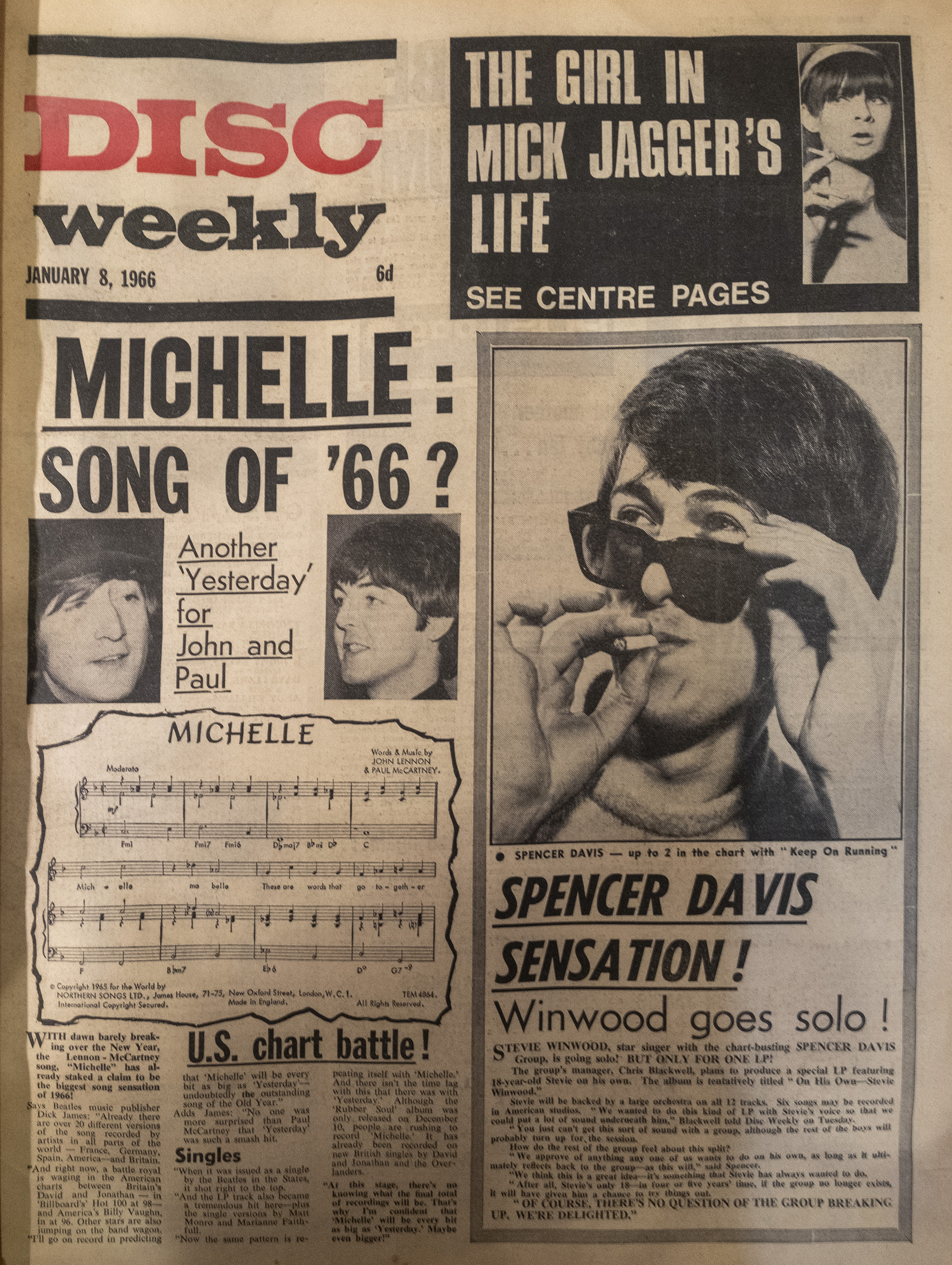
MICHELLE: Overlanders hit at Paul
THE OVERLANDERS — who jumped into Disc Weekly’s Top 30 today with “Michelle” at No. 20 — this week hit out at the original Paul McCartney version of the song! They claim there was “a mistake” on the “Michelle” track featured on the Beatles “Rubber Soul” LP. Says Overlander PAUL ARNOLD: “It could be the master tape that slipped. But it’s quite obvious something went wrong on the last verse on the track. I feel sure it was an accident. A similar thing happened on the very first note of our version. I think it was a technical fault. But they should worry, with the Beatles LP selling the way it is!”
Comments Overlanders lead vocalist Laurie Mason: “We all think Paul’s version is the best, but we’re not sure that this mistake was done on purpose. If Paul had known about it I’m sure he wouldn’t have let it out.”
Replies PAUL McCARTNEY: “It slows down — but only because we thought it sounded better that way.”
Says Beatles recording manager GEORGE MARTIN: “The Overlanders ought to realise that if the tape had slipped the pitch would also have changed. Paul McCartney especially asked for the music to be slowed on the last part of ‘Michelle’ to add more emphasis to it. I think it achieves the effect desired.”
Adds Martin, who also recorded DAVID and JONATHAN’S version of ‘Michelle’: “I didn’t slow down David and Jonathan’s recording because I didn’t think it would suit them — as it did Paul.”
From Disc Weekly, January 15, 1966
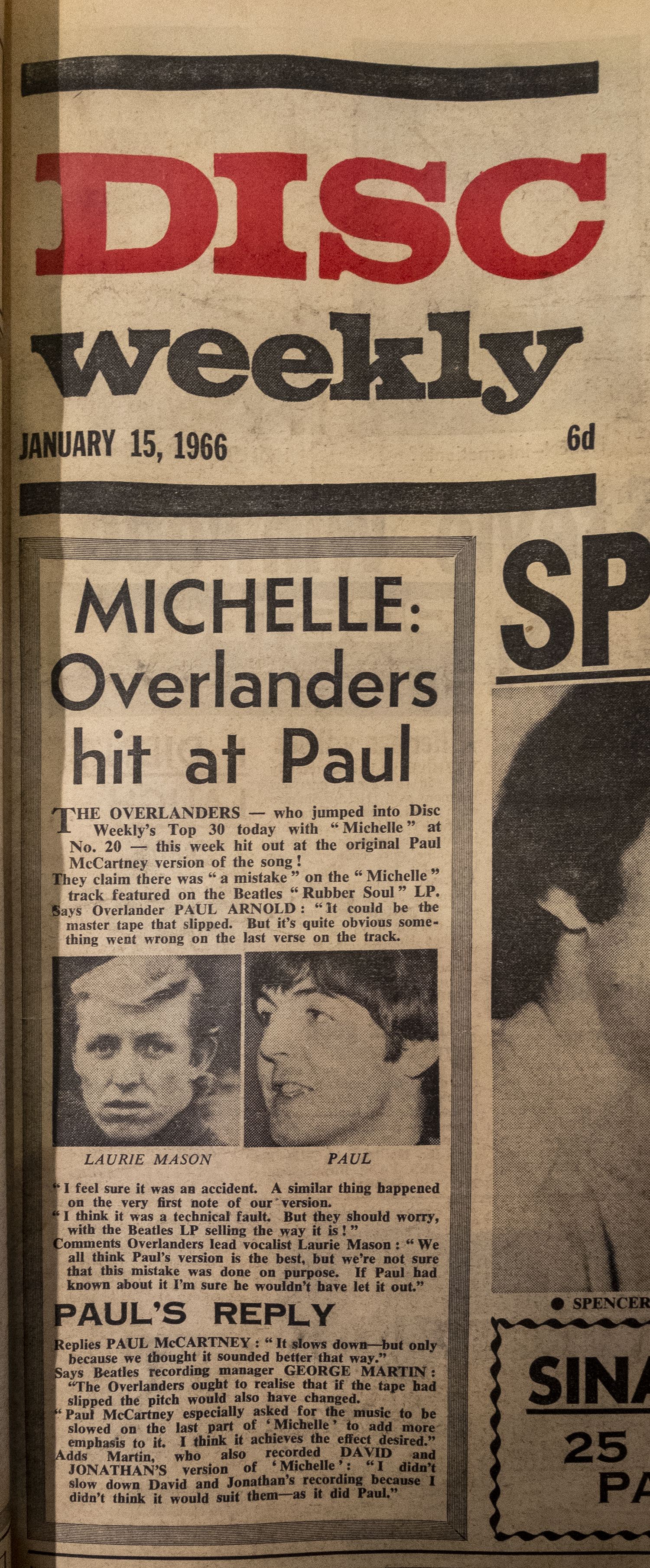
Michelle, ma belle
These are words that go together well
My Michelle
Michelle, ma belle
Sont des mots qui vont tres bien ensemble
Tres bien ensemble
I love you, I love you, I love you
That's all I want to say
Until I find a way
I will say the only words I know that you'll understand
Michelle, ma belle
Sont des mots qui vont tres bien ensemble
Tres bien ensemble
I need to, I need to, I need to
I need to make you see
Oh, what you mean to me
Until I do I'm hoping you will know what I mean
I love you
I want you, I want you, I want you
I think you know by now
I'll get to you somehow
Until I do I'm telling you so you'll understand
Michelle, ma belle
Sont des mots qui vont tres bien ensemble
Tres bien ensemble
And I will say the only words I know that you'll understand
My Michelle

LP • Released in 1965
2:33 • Studio version • C • Mono
Paul McCartney : Acoustic guitar, Bass, Vocals Ringo Starr : Drums John Lennon : Acoustic guitar, Backing vocals George Harrison : 12-string acoustic guitar, Backing vocals, Lead guitar George Martin : Producer Norman Smith : Recording engineer
SessionRecording : Nov 03, 1965 • Studio : EMI Studios, Studio Two, Abbey Road
SessionMixing : Nov 15, 1965 • Studio : EMI Studios, Studio One, Abbey Road

LP • Released in 1965
2:40 • Studio version • B • Stereo
Paul McCartney : Acoustic guitar, Bass, Vocals Ringo Starr : Drums John Lennon : Acoustic guitar, Backing vocals George Harrison : 12-string acoustic guitar, Backing vocals, Lead guitar George Martin : Producer Norman Smith : Recording engineer
SessionRecording : Nov 03, 1965 • Studio : EMI Studios, Studio Two, Abbey Road
SessionMixing : Nov 09, 1965 • Studio : EMI Studios, Room 65, Abbey Road

LP • Released in 1965
2:43 • Studio version • A • Mono
Paul McCartney : Acoustic guitar, Bass, Vocals Ringo Starr : Drums John Lennon : Acoustic guitar, Backing vocals George Harrison : 12-string acoustic guitar, Backing vocals, Lead guitar George Martin : Producer Norman Smith : Recording engineer
SessionRecording : Nov 03, 1965 • Studio : EMI Studios, Studio Two, Abbey Road
SessionMixing : Nov 09, 1965 • Studio : EMI Studios, Room 65, Abbey Road

LP • Released in 1965
2:40 • Studio version • B • Dolby Atmos
Paul McCartney : Acoustic guitar, Bass, Vocals Ringo Starr : Drums John Lennon : Acoustic guitar, Backing vocals George Harrison : 12-string acoustic guitar, Backing vocals, Lead guitar George Martin : Producer Norman Smith : Recording engineer
SessionRecording : Nov 03, 1965 • Studio : EMI Studios, Studio Two, Abbey Road
SessionMixing : Nov 09, 1965 • Studio : EMI Studios, Room 65, Abbey Road

EP • Released in 1966
2:33 • Studio version • C • Mono
Paul McCartney : Acoustic guitar, Bass, Vocals Ringo Starr : Drums John Lennon : Acoustic guitar, Backing vocals George Harrison : 12-string acoustic guitar, Backing vocals, Lead guitar George Martin : Producer Norman Smith : Recording engineer
SessionRecording : Nov 03, 1965 • Studio : EMI Studios, Studio Two, Abbey Road
SessionMixing : Nov 15, 1965 • Studio : EMI Studios, Studio One, Abbey Road

A Collection of Beatles Oldies (Mono)
LP • Released in 1966
2:40 • Studio version • C • Mono
Paul McCartney : Acoustic guitar, Bass, Vocals Ringo Starr : Drums John Lennon : Acoustic guitar, Backing vocals George Harrison : 12-string acoustic guitar, Backing vocals, Lead guitar George Martin : Producer Norman Smith : Recording engineer
SessionRecording : Nov 03, 1965 • Studio : EMI Studios, Studio Two, Abbey Road
SessionMixing : Nov 15, 1965 • Studio : EMI Studios, Studio One, Abbey Road

A Collection of Beatles Oldies (Stereo)
LP • Released in 1966
2:40 • Studio version • B • Stereo
Paul McCartney : Acoustic guitar, Bass, Vocals Ringo Starr : Drums John Lennon : Acoustic guitar, Backing vocals George Harrison : 12-string acoustic guitar, Backing vocals, Lead guitar George Martin : Producer Norman Smith : Recording engineer
SessionRecording : Nov 03, 1965 • Studio : EMI Studios, Studio Two, Abbey Road
SessionMixing : Nov 09, 1965 • Studio : EMI Studios, Room 65, Abbey Road

Official album • Released in 1973
2:40 • Studio version • B • Stereo
Paul McCartney : Acoustic guitar, Bass, Vocals Ringo Starr : Drums John Lennon : Acoustic guitar, Backing vocals George Harrison : 12-string acoustic guitar, Backing vocals, Lead guitar George Martin : Producer Norman Smith : Recording engineer
SessionRecording : Nov 03, 1965 • Studio : EMI Studios, Studio Two, Abbey Road
SessionMixing : Nov 09, 1965 • Studio : EMI Studios, Room 65, Abbey Road

Official album • Released in 1973
2:40 • Studio version • B • Stereo
Paul McCartney : Acoustic guitar, Bass, Vocals Ringo Starr : Drums John Lennon : Acoustic guitar, Backing vocals George Harrison : 12-string acoustic guitar, Backing vocals, Lead guitar George Martin : Producer Norman Smith : Recording engineer
SessionRecording : Nov 03, 1965 • Studio : EMI Studios, Studio Two, Abbey Road
SessionMixing : Nov 09, 1965 • Studio : EMI Studios, Room 65, Abbey Road


Live bootleg
3:17 • Live
Concert From the concert in Toronto, Canada on Jun 06, 1993

Live bootleg

Stockholm Globe Arena, May 4, 2003
Live bootleg
3:41 • Live
Concert From the concert in Stockholm, Sweden on May 04, 2003

Live bootleg
4:24 • Live
Concert From the concert in Montreal, Canada on Jul 26, 2011

La Belle France - 24 June 2004
Live bootleg
3:27 • Live
Concert From the concert in Paris, France on Jun 24, 2004
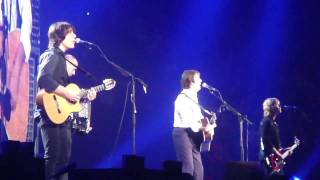
Concert Dec 10, 2009 in Paris
“Michelle” has been played in 151 concerts and 4 soundchecks.

Montreal • Bell Center • Canada
Nov 18, 2025 • Part of Got Back Tour

Montreal • Bell Center • Canada
Nov 17, 2025 • Part of Got Back Tour

Paris • La Defense Arena • France
Dec 05, 2024 • Part of Got Back Tour

Paris • La Defense Arena • France
Dec 04, 2024 • Part of Got Back Tour

Paris • La Defense Arena • France
Nov 28, 2018 • Part of Freshen Up Tour
The Lyrics: 1956 to the Present

"Michelle" is one of the songs featured in the book "The Lyrics: 1956 to the Present," published in 2021. The book explores Paul McCartney's early Liverpool days, his time with the Beatles, Wings, and his solo career. It pairs the lyrics of 154 of his songs with his first-person commentary on the circumstances of their creation, the inspirations behind them, and his current thoughts on them.

Notice any inaccuracies on this page? Have additional insights or ideas for new content? Or just want to share your thoughts? We value your feedback! Please use the form below to get in touch with us.
« Comment ? » – Barbara and Joe Abroad • Jun 21, 2022 • 3 years ago
[…] From https://www.the-paulmccartney-project.com/song/michelle/: […]