
December 23, 1969 - March 1970
Recording "McCartney"
For Paul McCartney
Last updated on August 14, 2025
December 23, 1969 - March 1970
For Paul McCartney
Last updated on August 14, 2025
Paul McCartney's home, 7 Cavendish Avenue, St John’s Wood • London • UK
Session Dec 21, 1969 • Mixing the "Get Back" album (4th compilation)
Session Dec 23-30, 1969 • "McCartney" home recordings
Session December 23, 1969 - March 1970 • Recording "McCartney"
Article Dec 25, 1969 • "Get Back" promo clip broadcast in color in the UK
Article Dec 31, 1969 • New year's eve party in Liverpool
Next session Jan 03, 1970 • Recording "I Me Mine"
AlbumSome of the songs worked on during this session were first released on the "McCartney" LP
In October 1969, shortly after John Lennon informed the other Beatles of his decision to leave the band, Paul McCartney and his wife Linda retreated from London to their farm in Campbeltown, Scotland, seeking isolation with their daughters, Heather and newborn Mary. It was a period of deep depression for Paul.
The family returned to London on November 17. Soon after, Paul began upgrading his home studio at 7 Cavendish Avenue, following advice from EMI Studios engineer Eddie Klein. EMI lent him a Studer J37 4-track tape recorder but did not provide a mixing console. This may have been by design, as it forced Paul to plug microphones and instruments directly into the machine, encouraging a lo-fi, experimental approach.
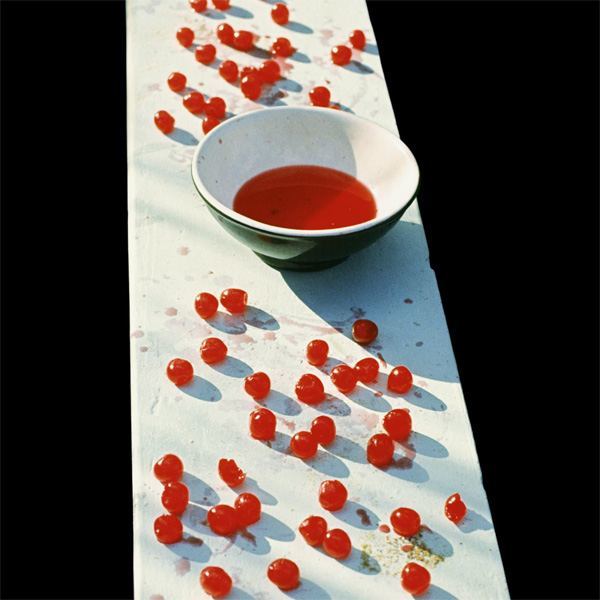
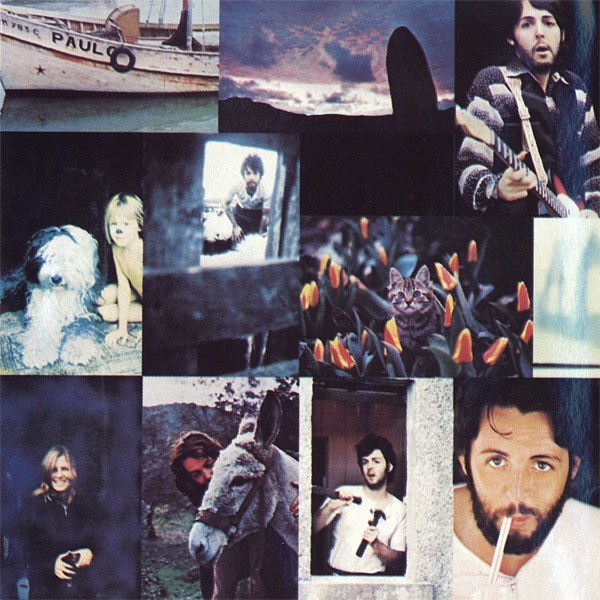
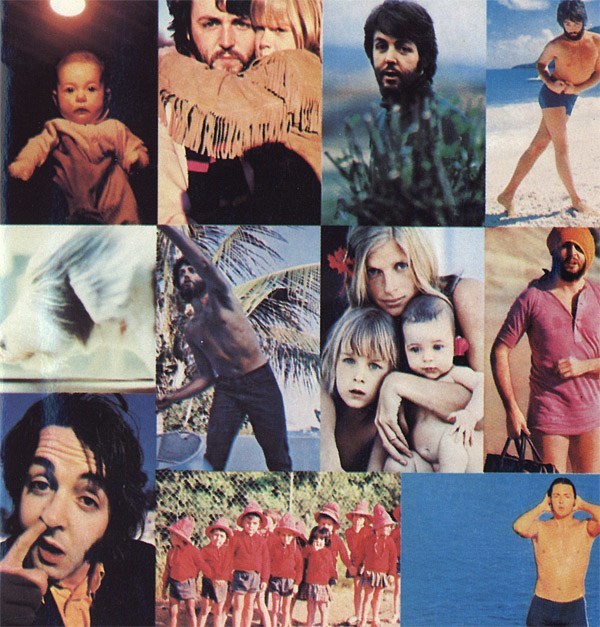
In December, Paul and his family left for a holiday in Antigua. One of Linda’s photographs from the trip would later be used for the cover of the “McCartney” album.
After John said he was leaving, I hung on for months, wondering whether The Beatles would ever come back together again and hoping that John might come around and say, ‘All right, lads, I’m ready to go back to work.’ None of us knew what to do, but we decided to wait until about March or April until our film, Let It Be, came out. But I was bored. I like to work. I’m an active person. Sit me down with a guitar and let me go. So, naturally enough, in the meantime, I began to look for something to do. I decided I was not going to sit there, sucking my thumbs, waiting for everyone to come back, so the album McCartney turned out to be the answer in my case. I had just got a new recording machine in my house and I found that I liked working on my own. At first it wasn’t going to be anything serious but it turned out to be a great time. When we had to go to the (Morgan) studios, Linda would make the booking and we’d take some sandwiches and a bottle of grape juice and put the baby on the floor and it was all like a holiday. So, as a natural turn of events, from looking for something to do, I found that I was enjoying working alone as much as I had enjoyed the early days. So, anyway, McCartney came out and Linda and I did it totally, the record, the cover, the ads, everything presented to the record company. Then there started to appear these little advertisements. On the bottom was ‘On Apple Records’, which was okay. But somebody had also come along and slapped on ‘An ABKCO managed company’. Now that is Klein’s company and has nothing to do with my record. It’s like Klein taking part of the credit for my record. All those little things kept happening, such trivia compared to what happened. Maybe that sounds petty, but I can go into other examples of this kind of thing. All these things that are continuously happening makes me feel like I’m a junior with the record company, like Klein is the boss and I’m nothing. Well, I’m a senior… The income from the McCartney album is still being held by Apple and Linda and I are the only ones on the record.
Paul McCartney – From “The Beatles: Off the Record” by Keith Badman, 2008
I really had to ask myself, “Do I want to give up music, or keep going?” I got a four-track Studer recording machine, like the Beatles used for Sgt. Pepper, put it in the corner of the living-room at my house in London and tried a very simple technique of just plugging directly into the back, not going through a mixing desk. It’s a cool way to record because it’s pure. If, say, I was doing a drum track, I’d play the drums, record it with one microphone, listen to it back, move the mike a little if there wasn’t enough hi-hat or cymbal, and then re-record. Then I’d add bass by plugging the mike into track two and overdubbing while listening to track one through headphones. I’d do that with all with four tracks. It was very hands-on, primitive way of working. In the opening track, The Lovely Linda, you can hear the door squeak as Linda came in while I was recording. It was a good take, so we left it in. I made the whole McCartney album like that, and when I needed to go further we used a little studio in Willesden called Morgan, just to get a bit more high-tech. But I played all the instruments and we did a few harmonies together. It was funky, and still sounds good to me.
Paul McCartney – From the “Wingspan” documentary, 2001
It wasn’t just domesticity that changed me. It was domesticity, plus the end of the Beatles. So you can see why I would begin to believe that domesticity equals lack of bite. I think it’s actually lack of Beatles that equals lack of bite, rather than just domesticity. The lack of great sounding boards like John, Ringo, George to actually talk to about the music. Having three other major talents around… I think that had quite a bit to do with it.
Paul McCartney – Interview with Playboy, December 1984
Well, none of us knew what to do [when John said he was leaving the Beatles], but we decided to wait until about March or April of this year until our film, Let It Be, came out. But I was bored. I like to work, I’m an active person. Sit me down with a guitar and let me go. That’s my job.
Anyway, I hung on for all these months wondering whether the Beatles would ever come back together again… and let’s face it I’ve been as vague as anyone, hoping that John might come around and say, “All right lads, I’m ready to go back to work,” and naturally enough, in the meantime, I began to look for something to do. And the album, McCartney, turned out to be the answer in my case.
Paul McCartney – Interview for Evening Standard, April 21, 1970
The songs recorded during those home sessions were a mix of leftover material from the Beatles era — such as “Teddy Boy” and “Hot As Sun” — and new compositions recently written in Scotland — like “The Lovely Linda” and “That Would Be Something” — alongside pieces created spontaneously.
I was like a professor in his laboratory. Very simple [set-up], as basic as you can get … Even now that album has an interesting sound. Very analogue, very direct.
Paul McCartney – Interview with Paul Du Noyer for MOJO, June 2001
It was around this time that Mal began working for Paul in a clandestine fashion, cloaking his movements so as not to arouse the attention of any other Beatle and to stay under the radar with the folks at Apple. He even kept his activities on Paul’s behalf from Neil. […]
Recording an album in this fashion proved to be the perfect balm for Paul’s depression. With periodic visits from his loyal manservant Mal, who would ferry instruments and fresh four-track tape over to 7 Cavendish Avenue, Paul began to enjoy the homespun nature of his post-Beatles life.
From “Living the Beatles Legend: The untold story of Mal Evans” by Kenneth Womack, 2023
It was a very free album for me to do because I’d get up and think about breakfast and then wander into the living room to do a track.
Paul McCartney – Interview with Musician, February 1988
At the time it was really a release, it was a freedom thing for me, because it was in the heat of The Beatles breaking up. I just wanted to get back to absolute basics in the same way as I wanted The Beatles to go back on the road, as just a little band again and try and remember who we were. In the same way I’d been liking the idea of the Let It Be sessions, where we’d just do “Maggie Maggie May”, just having fun as a band, so this was me trying to continue that vibe. I didn’t really think it was going to be an album. It was just me recording for the sake of it.
Paul McCartney – From the “McCartney – Archive Collection” book, 2011
So when “McCartney” came along I had all these rough things and I liked them all and thought, well, they’re rough, but they’ve got that certain kind of thing about them, so we’ll leave it and just put it out. It’s not an album which was really sweated over, and yet now I find it’s a lot of people’s favorite. They think it’s great to hear the kids screaming and the door opening, it’s lovely.
Paul McCartney – Interview with Rolling Stones, January 31, 1974
By late December or early January 1970, Paul felt the collection of tracks he had recorded could form the basis of an album. He asked Linda to book studio time at Morgan Studios and EMI Studios, Abbey Road, but wanting to keep the project secret for the time being, instructed her to use a pseudonym. She booked the sessions under the name “Billy Martin,” borrowed from the American baseball player and manager.
After a final day of home recording on January 17, 1970, Paul resumed work on the new album at EMI Studios on January 24, 1970, and spent time there on on February 7 and 8 and again on February 15, when he recorded “Maybe I’m Amazed,” – widely regarded as the standout track of “McCartney” – from start to finish.
From February 16 to February 20, Paul relocated to Morgan Studios, where, assisted by junior engineer Robin Black, he overdubbed material recorded at home in December and recorded a new track, “Kreen-Akrore,” inspired by an ITV documentary he had watched the previous evening about an isolated indigenous tribe living in the Brazilian jungle.
On February 21, 22, 24 and 25, he returned to EMI Studios to mix the work completed so far, and to record two new tracks, “Every Night” and “Man We Was Lonely.”
On February 26 and 28, Paul was back at Morgan Studios to mix the final tracks and complete the sequencing of the new album.
We decided we didn’t want to tell anybody what we were doing. That way it gets to be like home at the studio. No one knows about it, and there is no one in the studio or dropping by.
Paul McCartney – From interview with RollingStone, 1970
You recorded your first album (McCartney) under the pseudonym BILLY MARTIN.
Well, sometimes if you don’t want people to know that you’re recording at a place – it’s quite widely done now – you use a fake name. For two reasons, really: fun and privacy. I think there’s a big character in American baseball called Billy Martin so that’s where the name came from.
Paul McCartney – Interview with Club Sandwich N°62, Spring 1992
When we had to go to the studios, Linda would make the booking and we’d take some sandwiches and a bottle of grape juice and put the baby on the floor and it was all like a holiday. So, as a natural turn of events, from looking for something to do, I found that I was enjoying working alone as much as I had enjoyed the early days.
Paul McCartney – From interview to Evening Standard by Ray Connolly, April 1970
Home was being natural, being myself. I either made it at home – I got a machine from EMI, a four-track – or went down to a little studio, Morgan in Willesden, just working with one engineer. Me and Lin and the baby in the control room. It was joyous. That was exciting, you know? Newlyweds. If you’re lucky, it’s a great few years. Young, married life is a very special time.
Paul McCartney – From “Conversations with McCartney” by Paul du Noyer, 2016
When you were working on “McCartney” in London, was it strange not being able to bounce ideas off the others?
Yeah, it was. Because right up until that point I’d been working with John, the best collaborator in the world. Suddenly that was taken away. It was very difficult. But I thought, ‘Well, I’m not going to worry about it. I’m going to sling some ideas down, have a little go on the drums.’ I had my own stuff at the house for my own fun, I wasn’t going into the studio with The Beatles. I wasn’t sweating it. Then suddenly, it became something. “OK, this is an album.”
Paul McCartney, in UNCUT interview, January 2021
February 5: “Bed this morning late. Up at 1 to phone. Conversation with Paul, something like this: ‘Malcolm Evans’ ‘Yeah Paul’ ‘I’ve got the EMI [Abbey Road studio] over this weekend — I would like you to pick up some gear from the house’ ‘Great man, that’s lovely. Session at EMI?’ ‘Yes but I don’t want any one there to make me tea, I have the family, wife and kids there.'”
Mal Evans – From his diary – From Here, there and everywhere (thetimes.co.uk), March 20, 2005
The job of a balance engineer in the studio was to record on to tape (at that time) the sound the engineer heard in the studio, to the best of his ability. Multi-track recording was different as one could overdub instruments separately, one at a time, eliminating the need for other musicians. The album McCartney was done that way as Paul played all the instruments himself. “Maybe I’m Amazed” and “Every Night” were recorded and mixed in Studio 2, EMI. Paul recorded a lot of tracks at home, some were put on multi-track and overdubs were added.
Phil McDonald – Engineer at EMI Studios – From “McCartney – Archive Collection” book, 2011
It was great seeing Paul play all the instruments. Paul recorded the overdubs fairly straightforward, he knew what he was going to do. Sometimes Paul would describe a particular sound he wanted… Paul made everything seem easy showing what a master of his craft he was!
Robin Black – Engineer at Morgan Studios – Interview from “Paul McCartney: Recording Sessions (1969-2013)” by Luca Perasi
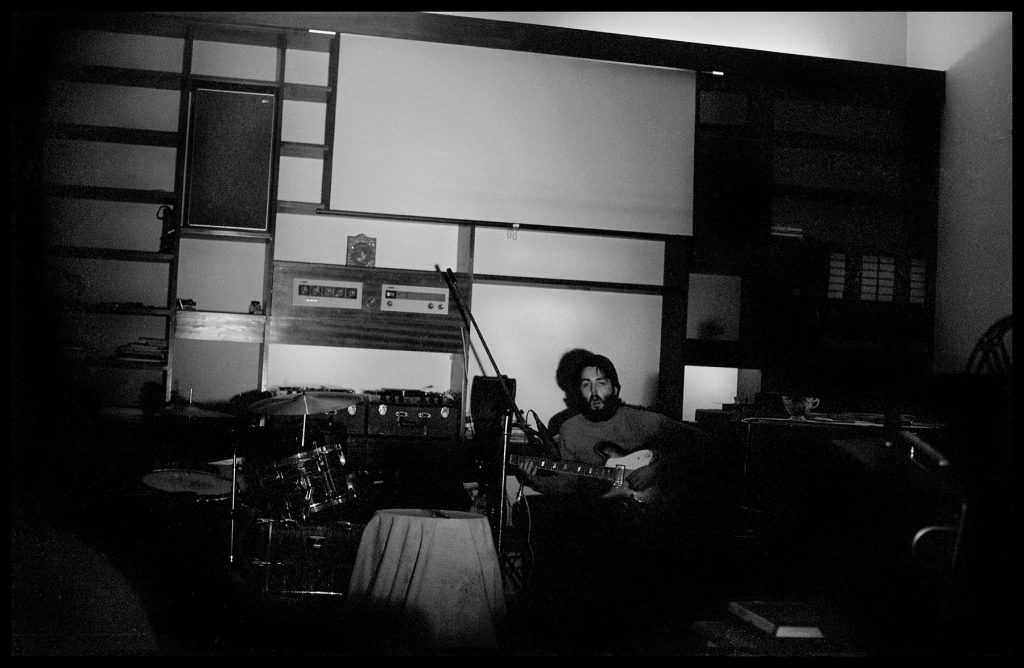
On 23 March, while American producer Phil Spector began mixing the Get Back tapes for release as the Beatles’ Let It Be album, in Abbey Road’s Studio 4, McCartney completed work on his eponymous album in Studio 2. Although McCartney has frequently maintained that he was ignorant of Spector’s involvement until receiving an acetate copy of Let It Be for approval, author Peter Doggett writes that after “several weeks”, McCartney had finally “answered the string of messages he’d received about Phil Spector” and had agreed to let him prepare Let It Be for release.
The recording and mixing sessions were completed on March 25. A playback session of the album was held on March 16, and the mastering was completed on March 21, 1970.

Dec 23-30, 1969 • Songs recorded during this session appear on McCartney
Jan 17, 1970 • Songs recorded during this session appear on McCartney
Jan 24, 1970 • Songs recorded during this session appear on McCartney
Recording the "McCartney" album
Feb 07-08, 1970 • Songs recorded during this session appear on McCartney
Feb 15, 1970 • Songs recorded during this session appear on McCartney
Tape copying for the "McCartney" album
Feb 16, 1970 • Songs recorded during this session appear on McCartney
Feb 17, 1970 • Songs recorded during this session appear on McCartney
Recording "Junk", "Kreen - Akrore"
Feb 18, 1970 • Songs recorded during this session appear on McCartney
Feb 19, 1970 • Songs recorded during this session appear on McCartney
Feb 20, 1970 • Songs recorded during this session appear on McCartney
Mixing "The Lovely Linda", "Glasses/Suicide", "Momma Miss America", "Singalong Junk"
Feb 21, 1970 • Songs recorded during this session appear on McCartney
Recording "Every Night", mixing "Maybe I'm Amazed", "That Would Be Something", "Valentine Day"
Feb 22, 1970 • Songs recorded during this session appear on McCartney
Mixing "Hot As Sun", "Every Night", "Don't Cry Baby"
Feb 24, 1970 • Songs recorded during this session appear on McCartney
Recording and mixing "Man We Was Lonely"
Feb 25, 1970 • Songs recorded during this session appear on McCartney
Mixing "Junk", "Teddy Boy", "Kreen Akrore"
Feb 26, 1970 • Songs recorded during this session appear on McCartney
Feb 28, 1970 • Songs recorded during this session appear on McCartney
Playback of the "McCartney" album
Mar 16, 1970 • Songs recorded during this session appear on McCartney
Creating the master tapes of "McCartney" album
Mar 23, 1970 • Songs recorded during this session appear on McCartney
Dec 23-30, 1969 • "McCartney" home recordings
Dec 23-30, 1969 • "McCartney" home recordings
Dec 23-30, 1969 • "McCartney" home recordings
Dec 23-30, 1969 • "McCartney" home recordings
Dec 23-30, 1969 • "McCartney" home recordings
Dec 23-30, 1969 • "McCartney" home recordings
Dec 23-30, 1969 • "McCartney" home recordings
Dec 23-30, 1969 • "McCartney" home recordings
Dec 23-30, 1969 • "McCartney" home recordings
Dec 23-30, 1969 • "McCartney" home recordings
Dec 23-30, 1969 • "McCartney" home recordings
Dec 23-30, 1969 • "McCartney" home recordings
Jan 17, 1970 • Recording "Junk"
Jan 24, 1970 • Mixing "The Lovely Linda", "That Would Be Something", "Valentine Day", "Momma", "Oo You", "Teddy Boy"
Jan 24, 1970 • Mixing "The Lovely Linda", "That Would Be Something", "Valentine Day", "Momma", "Oo You", "Teddy Boy"
Jan 24, 1970 • Mixing "The Lovely Linda", "That Would Be Something", "Valentine Day", "Momma", "Oo You", "Teddy Boy"
Jan 24, 1970 • Mixing "The Lovely Linda", "That Would Be Something", "Valentine Day", "Momma", "Oo You", "Teddy Boy"
Jan 24, 1970 • Mixing "The Lovely Linda", "That Would Be Something", "Valentine Day", "Momma", "Oo You", "Teddy Boy"
Jan 24, 1970 • Mixing "The Lovely Linda", "That Would Be Something", "Valentine Day", "Momma", "Oo You", "Teddy Boy"
Feb 15, 1970 • Recording "Maybe I'm Amazed"
Feb 16, 1970 • Tape copying for the "McCartney" album
Feb 16, 1970 • Tape copying for the "McCartney" album
Feb 16, 1970 • Tape copying for the "McCartney" album
Feb 16, 1970 • Tape copying for the "McCartney" album
Feb 17, 1970 • Recording "Teddy Boy"
Feb 18, 1970 • Recording "Junk", "Kreen - Akrore"
Feb 18, 1970 • Recording "Junk", "Kreen - Akrore"
Feb 19, 1970 • Recording "Hot As Sun"
Feb 20, 1970 • Recording "Oo You", mixing “The Lovely Linda”, “Glasses”, “Junk”, “Singalong Junk”, "Momma Miss America"
Feb 20, 1970 • Recording "Oo You", mixing “The Lovely Linda”, “Glasses”, “Junk”, “Singalong Junk”, "Momma Miss America"
Feb 20, 1970 • Recording "Oo You", mixing “The Lovely Linda”, “Glasses”, “Junk”, “Singalong Junk”, "Momma Miss America"
Feb 20, 1970 • Recording "Oo You", mixing “The Lovely Linda”, “Glasses”, “Junk”, “Singalong Junk”, "Momma Miss America"
Feb 20, 1970 • Recording "Oo You", mixing “The Lovely Linda”, “Glasses”, “Junk”, “Singalong Junk”, "Momma Miss America"
Feb 20, 1970 • Recording "Oo You", mixing “The Lovely Linda”, “Glasses”, “Junk”, “Singalong Junk”, "Momma Miss America"
Feb 21, 1970 • Mixing "The Lovely Linda", "Glasses/Suicide", "Momma Miss America", "Singalong Junk"
Feb 21, 1970 • Mixing "The Lovely Linda", "Glasses/Suicide", "Momma Miss America", "Singalong Junk"
Feb 21, 1970 • Mixing "The Lovely Linda", "Glasses/Suicide", "Momma Miss America", "Singalong Junk"
Feb 21, 1970 • Mixing "The Lovely Linda", "Glasses/Suicide", "Momma Miss America", "Singalong Junk"
Feb 21, 1970 • Mixing "The Lovely Linda", "Glasses/Suicide", "Momma Miss America", "Singalong Junk"
Feb 21, 1970 • Mixing "The Lovely Linda", "Glasses/Suicide", "Momma Miss America", "Singalong Junk"
Feb 22, 1970 • Recording "Every Night", mixing "Maybe I'm Amazed", "That Would Be Something", "Valentine Day"
Feb 22, 1970 • Recording "Every Night", mixing "Maybe I'm Amazed", "That Would Be Something", "Valentine Day"
Feb 22, 1970 • Recording "Every Night", mixing "Maybe I'm Amazed", "That Would Be Something", "Valentine Day"
Feb 22, 1970 • Recording "Every Night", mixing "Maybe I'm Amazed", "That Would Be Something", "Valentine Day"
Feb 24, 1970 • Mixing "Hot As Sun", "Every Night", "Don't Cry Baby"
Feb 24, 1970 • Mixing "Hot As Sun", "Every Night", "Don't Cry Baby"
Feb 24, 1970 • Mixing "Hot As Sun", "Every Night", "Don't Cry Baby"
Feb 25, 1970 • Recording and mixing "Man We Was Lonely"
Feb 26, 1970 • Mixing "Junk", "Teddy Boy", "Kreen Akrore"
Feb 26, 1970 • Mixing "Junk", "Teddy Boy", "Kreen Akrore"
Feb 26, 1970 • Mixing "Junk", "Teddy Boy", "Kreen Akrore"
Feb 28, 1970 • Mixing "Oo You"
Eight Arms to Hold You: The Solo Beatles Compendium
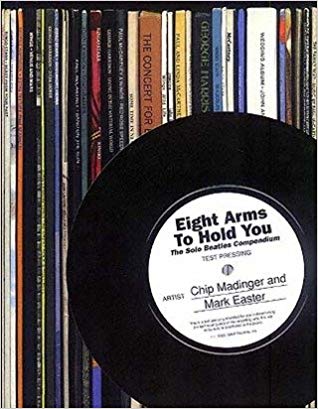
Eight Arms To Hold You: The Solo Beatles Compendium is the ultimate look at the careers of John Lennon, Paul McCartney, George Harrison and Ringo Starr beyond the Beatles. Every aspect of their professional careers as solo artists is explored, from recording sessions, record releases and tours, to television, film and music videos, including everything in between. From their early film soundtrack work to the officially released retrospectives, all solo efforts by the four men are exhaustively examined.

Notice any inaccuracies on this page? Have additional insights or ideas for new content? Or just want to share your thoughts? We value your feedback! Please use the form below to get in touch with us.