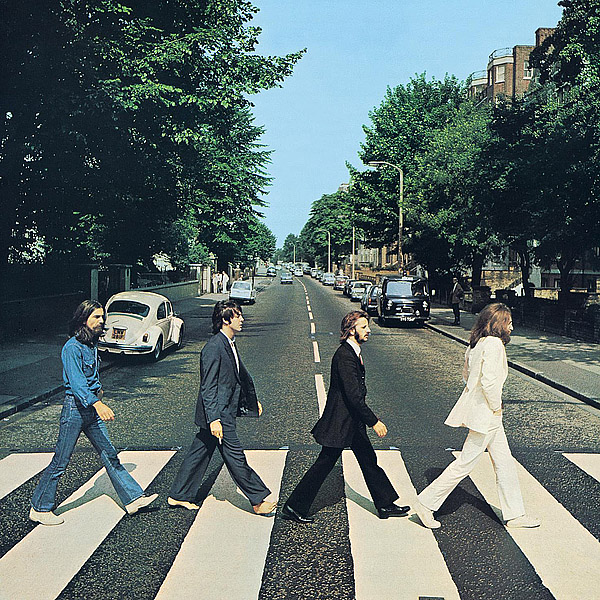
Album This song officially appears on the Abbey Road LP.
Timeline This song was officially released in 1969
This song was recorded during the following studio sessions:

Interview for the Evening Standard
Tuesday, April 21-22, 1970 • From Evening Standard

December 1984 • From Playboy

October 2005 • From Bass Player

Jan 08, 2007 • From Entertainment Weekly

July 2007 • From Clash

All Songs +1: The Beatles Are Live And Sounding Better Than Ever
Aug 25, 2016 • From NPR Music

October 2016 • From Q Magazine

When Paul McCartney teamed up with Elvis Costello, the Beatle got back on track
Mar 16, 2017 • From The Washington Post

Sep 14, 2018 • From New Musical Express (NME)

BBC Late Night Line Up previews “Abbey Road”
Sep 19, 1969

Officially appears on Hello, Goodbye / I Am The Walrus (UK version)

Officially appears on The Beatles (Mono)
John came in with an up-tempo song that sounded exactly like Chuck Berry’s ‘You Can’t Catch Me’, even down to the ‘flat-top’ lyric. I said, ‘Let’s slow it down with a swampy bass-and-drums vibe.’ I came up with a bass line and it all flowed from there. Great record.
Paul McCartney – From “The Beatles Anthology” book, 2000
From Wikipedia:
“Come Together” is a song by the English rock band the Beatles, written by John Lennon and credited to Lennon–McCartney. The song is the opening track on the band’s 1969 studio album Abbey Road. It was also a double A-side single in the United Kingdom with “Something“, reaching No. 4 in the UK charts.
The song has been covered by several other artists, including Ike & Tina Turner, Arctic Monkeys, Aerosmith, Eurythmics, Joe Cocker, Michael Jackson, and Gary Clark Jr.
Background and inspiration
In early 1969, John Lennon and his wife, Yoko Ono, held nonviolent protests against the Vietnam War, dubbed the Bed-ins for Peace. In May, during the Montreal portion of the bed-in, counterculture figures from across North America visited Lennon. Among the visitors was the American psychologist Timothy Leary, an early advocate of LSD whom Lennon admired. Leary intended to run for Governor of California in the following year’s election, and he asked Lennon to write him a campaign song based on the campaign’s slogan, “Come Together – Join the Party!” The resulting chant was only a line long: “Come together and join the party”. Lennon promised to finish and record the song, and Leary later recalled Lennon giving him a tape of the piece, but the two did not interact again.
In July 1969, during sessions for the Beatles’ album Abbey Road, Lennon used the phrase “come together” from the Leary campaign song to compose a new song for the album. Based on the 1956 single “You Can’t Catch Me” by the American guitarist Chuck Berry, Lennon’s composition began as an up-tempo blues number, only slightly altering Berry’s original lyric of “Here come a flattop / He was movin’ up with me” to “Here come ol’ flattop / He come groovin’ up slowly”. Lennon further incorporated the phrase “shoot me” from his unfinished and unreleased January 1969 song “Watching Rainbows“. The lyrics of Lennon’s new song were inspired by his relationship with Ono, and he delivered them quickly, similar in style to Berry’s song. The author Peter Doggett wrote that “each phrase [passes] too quickly to be understood at first hearing, the sound as important as the meaning”.
When Lennon presented the composition to his bandmates, his songwriting partner Paul McCartney noticed its similarity to “You Can’t Catch Me” and recommended they slow it in tempo to reduce the resemblance. The band biographer Jonathan Gould suggested that the song has only a single “pariah-like protagonist” and Lennon was “painting another sardonic self-portrait”. In a December 1987 interview by Selina Scott on the television show West 57th Street, George Harrison stated that he wrote two lines of the song.
Production – Recording
The Beatles taped the basic track for “Come Together” at EMI Studios (now Abbey Road Studios) in Studio Three on 21 July 1969, during the sessions for Abbey Road. George Martin produced the session, assisted by the balance engineers Geoff Emerick and Phil McDonald. At McCartney’s request, the session marked Emerick’s first with the group since July 1968; Emerick had quit working with the group during sessions for their 1968 album, The Beatles (also known as “the White Album”), due to what he found a tense and negative atmosphere. The song was Lennon’s first new composition for the band in three months, after he and McCartney recorded “The Ballad of John and Yoko” on 14 April.[note 2]
The group taped eight takes of “Come Together”, with take six marked “best”. The line-up consisted of Lennon singing lead vocal, McCartney on bass, George Harrison on rhythm guitar and Ringo Starr on drums. Starr placed tea towels over his tom drums to further dampen their sound. Without needing to use his hands to play guitar, Lennon added handclaps each time he sang “Shoot me!”, also adding tambourine over both the solo and coda. Taped on 4-track recording equipment, at the end of the session, take six was copied over to 8-track tape in Studio Two, allowing for both overdubbing and the easy manipulation of EQ.
Production – Overdubbing and mixing
Overdubbing for “Come Together” took place in the week following the recording of the basic track. On 22 July, Lennon sang a new lead vocal and again added handclaps, both being treated to a tape delay, with automatic double tracking added during the choruses. At Lennon’s request, McCartney played a Fender Rhodes electric piano, with McCartney later recalling that Lennon “wanted a piano lick to be very swampy and smokey, and I played it that way and he liked that a lot”.[note 3] Harrison added a heavily distorted guitar during the refrains, while Starr added a maraca. Work on the track continued the next day, with more vocals added. On 25 July, McCartney contributed a harmony vocal sung below Lennon’s part, and on 29 July, Lennon overdubbed a guitar during the song’s middle climax. Work on the song finished the next day, with Harrison playing a lead guitar solo with a Gibson Les Paul during the song’s coda.
Mixing on “Come Together” was completed on 7 August in Studio Two. Done on EMI’s new solid state mixing console, the EMI TG12345, Emerick later suggested that the console’s “softer and rounder” sonic texture influenced the band’s performances, with “the rhythm tracks … coming back off tape a little less forcefully”, the overdubs were subsequently “performed with less attitude”. He also suggests that, because McCartney’s bass hits on the “me” of Lennon’s line “Shoot me!”, only “Shoot” is easily audible on the finished recording. Ten stereo mixes were made during the process, with the first attempt marked “best”. Like the rest of Abbey Road, the song was never mixed for mono.
Commentary by band members and George Martin
Lennon later referred to “Come Together” as “one of my favourite Beatles tracks. It’s funky, it’s bluesy, and I’m singing it pretty well.” Martin said of the song:
If I had to pick one song that showed the four disparate talents of the boys and the ways they combined to make a great sound, I would choose ‘Come Together’. The original song is good, and with John’s voice it’s better. Then Paul has this idea for this great little riff. And Ringo hears that and does a drum thing that fits in, and that establishes a pattern that John leapt upon and did the [‘shoot me’] part. And then there’s George’s guitar at the end. The four of them became much, much better than the individual components.
In May 2021, Ringo Starr said it was his favourite Beatles song in an interview on The Late Show with Stephen Colbert.
Release and legacy
Apple Records, the Beatles’ EMI-distributed record label, released Abbey Road on 26 September 1969, with “Come Together” sequenced as the opening track. The song was issued as a double A-side single (as Apple 2654) with Harrison’s “Something” on 6 October in America. Commercially, the single was a massive success, staying on the US Billboard Hot 100 chart for 16 weeks, and reaching No. 1. It was released on 31 October 1969 in the UK (as Apple R5814) and reached No. 4.
The first take of the song, recorded on 21 July 1969, with slightly different lyrics, was released in 1996 on the outtake compilation Anthology 3, and take five of the song was released on the Abbey Road 50th Anniversary release.
Contemporary reviews
Tony Barrow, reviewing Abbey Road for the Liverpool Echo, referred to “Come Together” as “magnificently funky” and highlighted “its intriguing lyrics”. A reviewer for the Western Daily Press named “Come Together” as one of the album’s best tracks, and Jack Batten of The Toronto Star noted the song’s “eminently hummable little melodic riff”.
Retrospective assessments
“Come Together” has frequently appeared on numerous publications’ lists of the Beatles’ best songs. In 2006, Mojo magazine placed it at No. 13 in their list of the Beatles’ 101 best songs. Four years later, Rolling Stone ranked it No. 9 on their list of the band’s 100 greatest songs. Meanwhile, Entertainment Weekly and Ultimate Classic Rock ranked it at No. 44 and No. 20, respectively. In 2015, NME[citation needed] and Paste placed it at No. 20 and No. 23 in their respective lists of the band’s best songs.
Rolling Stone ranked “Come Together” at No. 202 on their list of the 500 Greatest Songs of All Time in 2004, re-ranking it No. 205 in the 2010 revised list.[citation needed] In 2024, Consequence ranked the song’s bassline as the best of all time.
Lawsuit
In late 1969, “Come Together” was the subject of a copyright infringement claim brought against Lennon by Big Seven Music, the publisher of Chuck Berry’s “You Can’t Catch Me”. Morris Levy, the owner of Big Seven Music, contended that it sounded similar musically to Berry’s original and shared some lyrics (Lennon sang: “Here come ol’ flattop, he come groovin’ up slowly”, and Berry’s had sung: “Here come a flattop, he was movin’ up with me”). Before recording, Lennon and McCartney deliberately slowed the song down and added a heavy bass riff in order to make the song more original. The case was settled out of court in 1973, with Levy’s lawyers agreeing that Lennon would compensate by recording three Big Seven songs for his next album. A brief version of “Ya Ya” with Lennon and his son Julian was released on the album Walls and Bridges in 1974. “You Can’t Catch Me” and another version of “Ya Ya” were released on Lennon’s 1975 album Rock ‘n’ Roll, but the third, “Angel Baby”, remained unreleased until after Lennon’s death. Levy again sued Lennon for breach of contract, and was eventually awarded $6,795.00. Lennon countersued after Levy released an album of Lennon material using tapes that were in his possession and was eventually awarded $84,912.96. The album was called Roots: John Lennon Sings the Great Rock & Roll Hits. […]
Paul McCartney recorded a version of “Come Together” with Noel Gallagher and Paul Weller for the 1995 charity album “HELP“, under the name the Smokin’ Mojo Filters (derived from a line in the song). Weller performed the lead vocal duties, with Paul McCartney and Noel Gallagher providing backing vocals, harmonies and bass and guitar. Their rendition reached No. 19 on the UK Singles Chart in December 1995.
On ‘Come Together’, I would have liked to sing harmony with John and I think he would have liked me to. But, I was too embarrassed to ask him and I don’t work to the best of my ability in that situation.
Paul McCartney – From interview with the Evening Standard, April 1970
I definitely did look up to John. We all looked up to John. He was older and he was very much the leader; he was the quickest wit and the smartest and all that kind of thing. So whenever he did praise any of us, it was great praise, indeed, because he didn’t dish it out much. If ever you got a speck of it, a crumb of it, you were quite grateful. With Come Together, for instance, he wanted a piano lick to be very swampy and smoky, and I played it that way and he liked that a lot. I was quite pleased with that.
Paul McCartney – Interview with Playboy, 1984
[John] originally brought it over as a very perky little song, and I pointed out to him that it was very similar to Chuck Berry’s You Can’t Catch Me. John acknowledged it was rather close to it so I said, ‘Well, anything you can do to get away from that.’ I suggested that we tried it swampy – ‘swampy’ was the word I used – so we did, we took it right down. I laid that bass line down which very much makes the mood. It’s actually a bass line that people now use very often in rap records. If it’s not a sample, they use that riff. But that was my contribution to that.
Paul McCartney – From “Paul McCartney: Many Years from Now” by Barry Miles, 1997
The Beatles were such a huge live band. Someone asked me the other day if I thought they were a good live band and I said, ‘Well listen to their records.’ Because their first three or four albums were of them playing live anyway. I remember remixing ‘Come Together,’ which is much later on Abbey Road, and I remember playing it for Paul [McCartney] and he said to me, ‘God, I remember how good we were on this day.’ And they were playing live. ‘Come Together’ is a live recording. They could really cut it live. It was just muscle memory.
Giles Martin – Interview with NPR Music, August 2016
There were times when John would bring a song in and I could have just gone, ‘That’s great John, let’s do it like that.’ But the producer in me would think, ‘No, that’s not going to work, why don’t we try it like that.’ So something like ‘Come Together’ would never have been as cool if I’d just been listening to the way John brought it in. And there were a few little instances like that where we would insist on it being one way.
Paul McCartney – Interview with NME, September 2018
From The Usenet Guide to Beatles Recording Variations:
[a] stereo 7 Aug 1969.
UK: Apple R5814 single 1969, Apple PCS 7088 Abbey Road 1969, Apple PCSP 718 The Beatles 1967-1970 1973.
US: Apple 2654 single 1969, Apple SO-383 Abbey Road 1969, Apple SKBO-3404 The Beatles 1967-1970 1973.
CD: EMI CDP 7 46446 2 Abbey Road 1987, EMI single 1989, EMI CDP 7 97039 2 The Beatles 1967-1970 1993.
Here come old flat top
He come groovin' up slowly
He got joo joo eyeballs
He one holy rollers
He got hair down to his knee
Got to be a joker
He just do what he please
He wear no shoeshine
He got toe jam football
He got monkey finger
He shoot Coca Cola
He say I know you, you know me
One thing I can tell you is
You got to be free
Come together, right now
Over me
He bad production
He got walrus gumboot
He got Ono sideboard
He one spinal cracker
He got feet down below his knees
Hold you in his armchair
You can feel his disease
Come together, right now
Over me
He roller coaster
He got early warning
He got muddy water
He one Mojo filter
He say one and one and one is three
Got to be good looking
Cause he's so hard to see
Come together right now
Over me

LP • Released in 1969
4:20 • Studio version • A • Stereo
Paul McCartney : Bass, Electric piano, Harmony vocals Ringo Starr : Drums, Maracas John Lennon : Handclaps, Harmony vocals, Rhythm guitar, Tambourine, Vocals George Harrison : Lead guitar, Rhythm guitar George Martin : Producer Geoff Emerick : Recording engineer Phil McDonald : Recording engineer
SessionRecording : Jul 21, 1969 • Studio : EMI Studios, Abbey Road
SessionOverdubs : 22, 23, 25, 29, 30 Jul 1969 • Studio : EMI Studios, Abbey Road
SessionMixing : Aug 07, 1969 • Studio : EMI Studios, Abbey Road

7" Single • Released in 1969
4:20 • Studio version • A • Stereo
Paul McCartney : Bass, Electric piano, Harmony vocals Ringo Starr : Drums, Maracas John Lennon : Handclaps, Harmony vocals, Rhythm guitar, Tambourine, Vocals George Harrison : Lead guitar, Rhythm guitar George Martin : Producer Geoff Emerick : Recording engineer Phil McDonald : Recording engineer
SessionRecording : Jul 21, 1969 • Studio : EMI Studios, Abbey Road
SessionOverdubs : 22, 23, 25, 29, 30 Jul 1969 • Studio : EMI Studios, Abbey Road
SessionMixing : Aug 07, 1969 • Studio : EMI Studios, Abbey Road

Official album • Released in 1973
4:20 • Studio version • A • Stereo
Paul McCartney : Bass, Electric piano, Harmony vocals Ringo Starr : Drums, Maracas John Lennon : Handclaps, Harmony vocals, Rhythm guitar, Tambourine, Vocals George Harrison : Lead guitar, Rhythm guitar George Martin : Producer Geoff Emerick : Recording engineer Phil McDonald : Recording engineer
SessionRecording : Jul 21, 1969 • Studio : EMI Studios, Abbey Road
SessionOverdubs : 22, 23, 25, 29, 30 Jul 1969 • Studio : EMI Studios, Abbey Road
SessionMixing : Aug 07, 1969 • Studio : EMI Studios, Abbey Road

LP • Released in 1973
4:20 • Studio version • A • Stereo
Paul McCartney : Bass, Electric piano, Harmony vocals Ringo Starr : Drums, Maracas John Lennon : Handclaps, Harmony vocals, Rhythm guitar, Tambourine, Vocals George Harrison : Lead guitar, Rhythm guitar George Martin : Producer Geoff Emerick : Recording engineer Phil McDonald : Recording engineer
SessionRecording : Jul 21, 1969 • Studio : EMI Studios, Abbey Road
SessionOverdubs : 22, 23, 25, 29, 30 Jul 1969 • Studio : EMI Studios, Abbey Road
SessionMixing : Aug 07, 1969 • Studio : EMI Studios, Abbey Road

Something / Come Together (UK - 1976)
7" Single • Released in 1976
4:20 • Studio version • A • Stereo
Paul McCartney : Bass, Electric piano, Harmony vocals Ringo Starr : Drums, Maracas John Lennon : Handclaps, Harmony vocals, Rhythm guitar, Tambourine, Vocals George Harrison : Lead guitar, Rhythm guitar George Martin : Producer Geoff Emerick : Recording engineer Phil McDonald : Recording engineer
SessionRecording : Jul 21, 1969 • Studio : EMI Studios, Abbey Road
SessionOverdubs : 22, 23, 25, 29, 30 Jul 1969 • Studio : EMI Studios, Abbey Road
SessionMixing : Aug 07, 1969 • Studio : EMI Studios, Abbey Road

Something / Come Together (UK - 1989)
7" Single • Released in 1989
4:20 • Studio version • A • Stereo
Paul McCartney : Bass, Electric piano, Harmony vocals Ringo Starr : Drums, Maracas John Lennon : Handclaps, Harmony vocals, Rhythm guitar, Tambourine, Vocals George Harrison : Lead guitar, Rhythm guitar George Martin : Producer Geoff Emerick : Recording engineer Phil McDonald : Recording engineer
SessionRecording : Jul 21, 1969 • Studio : EMI Studios, Abbey Road
SessionOverdubs : 22, 23, 25, 29, 30 Jul 1969 • Studio : EMI Studios, Abbey Road
SessionMixing : Aug 07, 1969 • Studio : EMI Studios, Abbey Road

Something / Come Together (UK - Picture Disc - 1989)
7" Single • Released in 1989
4:20 • Studio version • A • Stereo
Paul McCartney : Bass, Electric piano, Harmony vocals Ringo Starr : Drums, Maracas John Lennon : Handclaps, Harmony vocals, Rhythm guitar, Tambourine, Vocals George Harrison : Lead guitar, Rhythm guitar George Martin : Producer Geoff Emerick : Recording engineer Phil McDonald : Recording engineer
SessionRecording : Jul 21, 1969 • Studio : EMI Studios, Abbey Road
SessionOverdubs : 22, 23, 25, 29, 30 Jul 1969 • Studio : EMI Studios, Abbey Road
SessionMixing : Aug 07, 1969 • Studio : EMI Studios, Abbey Road

EP • Released in 1995
3:33 • Studio version • B
Paul McCartney : Backing vocals, Guitar, PianoPerformed by : The Smokin' Mojo Filters Paul Weller : Guitar, Vocals Noel Gallagher : Guitar Brendan Lynch : Producer Carleen Anderson : Backing vocals Steve White : Drums Max Heyes : Engineer Steve Craddock : Guitar
SessionRecording : Sep 04, 1995 • Studio : EMI Studios, Studio Two, Abbey Road

Official album • Released in 1995
3:33 • Studio version • B
Paul McCartney : Backing vocals, Guitar, PianoPerformed by : The Smokin' Mojo Filters Paul Weller : Guitar, Vocals Noel Gallagher : Guitar Brendan Lynch : Producer Carleen Anderson : Backing vocals Steve White : Drums Max Heyes : Engineer Steve Craddock : Guitar
SessionRecording : Sep 04, 1995 • Studio : EMI Studios, Studio Two, Abbey Road

Official album • Released in 1996
3:40 • Outtake • C • Stereo • Take 1 - Not playing an instrument, John clapped his hands while singing, adding tambourine late in the piece, with the other Beatles contributing what for the first take is a notably cohesive bass, guitar and drums backing to fill out this four-track recording. The absence of the echo that, at John's request, would smother the master version lends a stark clarity to the lyrics, which altered slightly when the definitive vocal was overdubbed.
Paul McCartney : Bass Ringo Starr : Drums John Lennon : Handclaps, Lead vocal, Tambourine George Harrison : Guitar George Martin : Producer Geoff Emerick : Recording engineer Phil McDonald : Recording engineer
SessionRecording : Jul 21, 1969 • Studio : EMI Studios, Abbey Road


Bootleg • Released in 2006
0:15 • Outtake • Take 4 Partial + Take 5 Announcement Mono
2000 • For The Beatles
Solid State: The Story of "Abbey Road" and the End of the Beatles
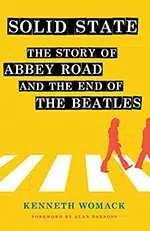
Acclaimed Beatles historian Kenneth Womack offers the most definitive account yet of the writing, recording, mixing, and reception of Abbey Road. In February 1969, the Beatles began working on what became their final album together. Abbey Road introduced a number of new techniques and technologies to the Beatles' sound, and included "Come Together," "Something," and "Here Comes the Sun," which all emerged as classics.

Notice any inaccuracies on this page? Have additional insights or ideas for new content? Or just want to share your thoughts? We value your feedback! Please use the form below to get in touch with us.
The Beatles Song You Never Realized Robin Williams Covered - Recent News • Aug 12, 2022 • 3 years ago
[…] Life.” “Come Together” was originally released on The Beatles’ “Abbey Road” album (via The Paul McCartney Project). According to The Guardian, Martin signed The Beatles to Parlophone records and produced nearly […]