Released in 2003
Adagio for Strings
Written by Samuel Barber • Instrumental
Last updated on June 22, 2025
Released in 2003
Written by Samuel Barber • Instrumental
Last updated on June 22, 2025
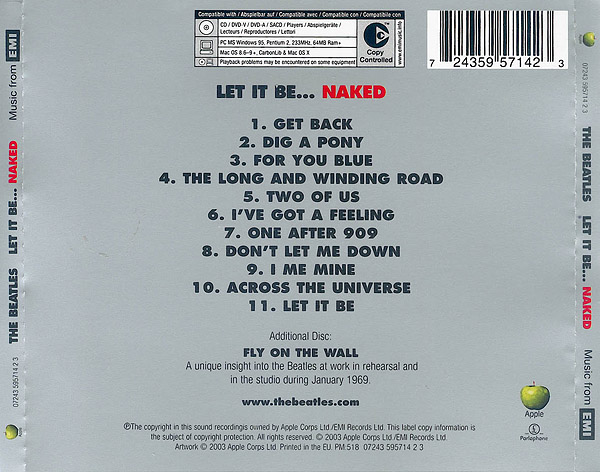
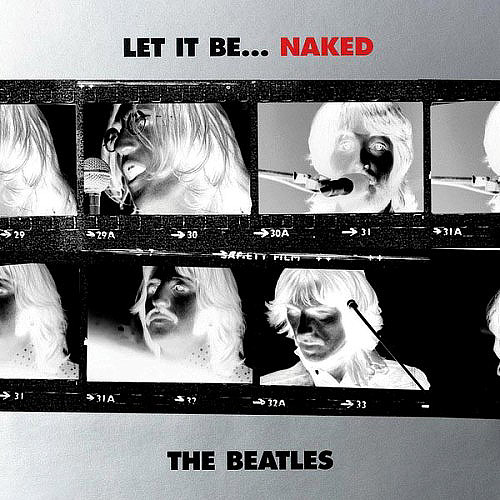
Album This song officially appears on the Let It Be... Naked Official album.
Timeline This song was officially released in 2003
Timeline This song was recorded in 1969
This song was recorded during the following studio sessions:
The "Get Back / Let It Be" sessions • Day 2
Jan 03, 1969
The "Get Back / Let It Be" sessions • Day 5
Jan 08, 1969
The "Get Back / Let It Be" sessions • Day 7
Jan 10, 1969
Mixing "Let It Be... Naked (Fly On The Wall)"
2002 or 2003 ?

Unreleased song
Unreleased song
Unreleased song
Unreleased song
When You're Drunk You Think Of Me
Unreleased song
What Do You Want To Make Those Eyes At Me For?
Unreleased song
Unreleased song
Unreleased song
On January 3, 1969, the second day of the “Get Back” sessions, Paul McCartney noodled on the piano and played Samuel Barber’s “Adagio For Strings“, waiting for John Lennon and George Harrison to arrive in the studio. He would briefly played the track again on January 8 and January 10.
Snippets of the January 3 and January 8 performances were released on “Fly On The Wall,” the companion CD to “Let It Be… Naked,” released in 2003.
From Wikipedia:
Adagio for Strings is a work by Samuel Barber, arguably his best known, arranged for string orchestra from the second movement of his String Quartet, Op. 11.
Barber finished the arrangement in 1936, the same year that he wrote the quartet. It was performed for the first time on November 5, 1938, by Arturo Toscanini conducting the NBC Symphony Orchestra in a radio broadcast from NBC Studio 8H. Toscanini also played the piece on his South American tour with the NBC Symphony in 1940.
Its reception was generally positive, with Alexander J. Morin writing that Adagio for Strings is “full of pathos and cathartic passion” and that it “rarely leaves a dry eye”. The music is the setting for Barber’s 1967 choral arrangement of Agnus Dei. Adagio for Strings has been featured in many TV shows and movies.

Official album • Released in 2003
DDSI.8.07 • 0:18 • Studio version • A • From the "Fly On The Wall" bonus disc
Paul McCartney : Piano Ringo Starr : Drums Kevin Howlett : Producer Brian Thompson : Engineer
SessionRecording : Jan 08, 1969 • Studio : Twickenham Film Studios • London • UK
SessionMixing : 2002 or 2003 ? • Studio : EMI Studios, Abbey Road Studios • London • UK
Official album • Released in 2003
DDSI.3.6 • 1:01 • Studio version • B • From the "Fly On The Wall" bonus disc
Paul McCartney : Piano Kevin Howlett : Producer Brian Thompson : Engineer
SessionRecording : Jan 03, 1969 • Studio : Twickenham Film Studios • London • UK
SessionMixing : 2002 or 2003 ? • Studio : EMI Studios, Abbey Road Studios • London • UK

A/B Road Complete Get Back Sessions - Jan 3rd 1969 - 1 & 2
Bootleg • Released in 2004
3:21 • Rehearsal • A • Jan.03 - D1-06 - Adagio For Strings 3.06 - Paul McCartney only on piano
Paul McCartney : Piano
SessionRecording : Jan 03, 1969 • Studio : Twickenham Film Studios, London, UK
A/B Road Complete Get Back Sessions - Jan 3rd 1969 - 1 & 2
Bootleg • Released in 2004
0:48 • Rehearsal • B • Jan.03 - D1-07 - Adagio For Strings 3.07 - Paul McCartney only on piano
Paul McCartney : Piano
SessionRecording : Jan 03, 1969 • Studio : Twickenham Film Studios, London, UK

A/B Road Complete Get Back Sessions - Jan 8th, 1969 - 3 & 4
Bootleg • Released in 2004
1:08 • Rehearsal • C • Jan.08 - D3-36 - Adagio For Strings 8.105
SessionRecording : Jan 08, 1969 • Studio : Twickenham Film Studios, London, UK

A/B Road Complete Get Back Sessions - Jan 10th, 1969 - 3 & 4
Bootleg • Released in 2004
2:23 • Rehearsal • D • Jan.10 - D4-05 - Adagio For Strings 10.75
SessionRecording : Jan 10, 1969 • Studio : Twickenham Film Studios, London, UK
"Adagio for Strings" was covered during The Beatles' "Get Back" sessions in January 1969. Here is the complete list of covers recorded by Paul McCartney, either alone or with other Beatles, during these sessions:
Paul McCartney: Music Is Ideas. The Stories Behind the Songs (Vol. 2) 1990-2012
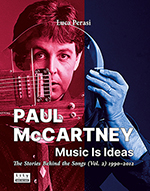
This new book by Luca Perasi traces Paul McCartney's post-Beatles output from 1990 to 2012 in the form of 250 song entries, filled with details about the recordings, stories behind the sessions and musical analysis. His pop albums, his forays into classical and avant-garde music, his penchant for covering old standards: a complete book to discover how these languages cross-pollinate and influence each other.The second volume in a series that has established itself as a unique guide to take the reader on a journey into the astonishing creativity of Paul McCartney.Read our exclusive interview with Luca Perasi

Notice any inaccuracies on this page? Have additional insights or ideas for new content? Or just want to share your thoughts? We value your feedback! Please use the form below to get in touch with us.